





What's Happening?
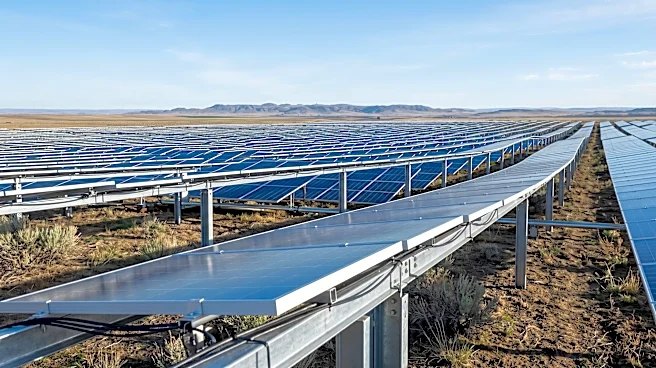
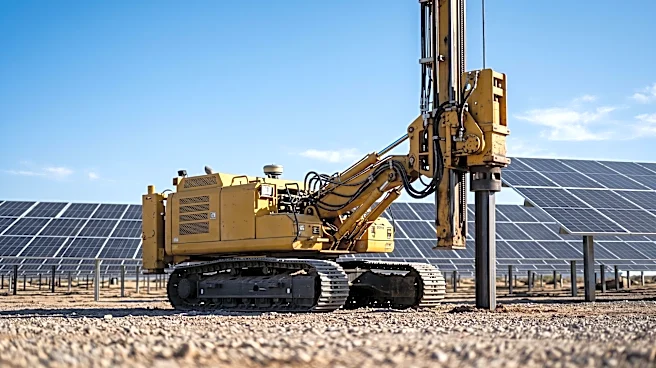
Xpanner has launched the X1 Piling R6, a fully automated pile-driving robot designed for the autonomous installation of posts at utility-scale solar and battery energy storage (BESS) sites. This new system aims to help builders meet the increasing demand
for new power generation despite a shortage of skilled labor. The X1 Piling R6 operates under the supervision of a single operator, utilizing high-precision GNSS and onboard sensors to accurately place each pile. The robot's core is Xpanner’s Everstar R6 crawler base machine, equipped with the company's automation stack. Operators can upload a plan, guide the machine to the row with a remote control, and then supervise as the robot autonomously navigates to subsequent pile locations and drives each pile. The system also connects to Xpanner Connect, a web-based project dashboard that records pile position, depth, and plumb in real-time, replacing manual reporting methods.
Why It's Important?
The introduction of Xpanner's autonomous pile driver is a significant development for the U.S. renewable energy sector, which is experiencing rapid growth and facing persistent labor shortages. By automating the pile-driving process, the X1 Piling R6 can substantially increase efficiency and accuracy in solar farm construction, allowing projects to be completed faster and with fewer personnel. This innovation directly addresses a critical bottleneck in scaling up renewable energy infrastructure, which is essential for meeting national energy goals and supporting the increasing power demands from sectors like AI data centers. For engineering, procurement, and construction (EPC) firms, this technology offers a solution to operational challenges, potentially reducing project costs and timelines. It also signifies a broader trend of automation in heavy construction, which could reshape labor requirements and skill sets within the industry.
What's Next?
Xpanner operates on a mixed capital expenditure/Software-as-a-Service (SaaS) subscription model, where customers purchase or rent the X1 Piling robot and license the automation software monthly. This flexible model allows contractors to deploy the technology as needed across various projects. Xpanner will provide initial installation, calibration, operator training, and technical support, while contractors supply on-site equipment operators. The company anticipates that the X1 Piling R6, designed to work in conjunction with the previously released X1 panel lift, will contribute to fully autonomous solar panel installation processes. This integrated approach suggests a future where solar farm construction could become largely automated, further accelerating the deployment of renewable energy projects across the U.S. and potentially influencing investment in similar robotic solutions for other infrastructure developments.
Beyond the Headlines
The deployment of autonomous construction robots like the X1 Piling R6 raises important questions about the future of labor in the construction industry. While it addresses immediate labor shortages, it also signals a long-term shift towards automation that could redefine job roles and require new skill sets for workers. The ethical implications of increased automation, such as job displacement and the need for workforce retraining programs, will become more prominent. Furthermore, the enhanced precision and data logging capabilities of such systems could lead to higher quality infrastructure and more efficient project management, setting new industry standards. This technological advancement also highlights the growing intersection of robotics, artificial intelligence, and renewable energy, pointing towards a future where smart, automated solutions are critical for sustainable development and energy independence.