
What's Happening?
Houston-based startup Deployable Energy has achieved criticality for its 1MWe 'Unity Nuclear Battery' system in just 155 days, responding to a challenge set by President Trump's May 2025 Executive Order
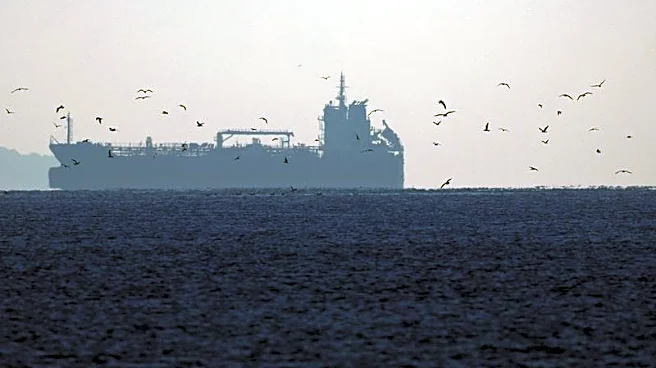
to achieve criticality by July 4, 2026. This small modular reactor (SMR) system, similar to a CANDU reactor, is designed to fit within a 20-foot container, making it suitable for maritime use. The company partnered with Hornbeck Offshore Services, Inc. in August 2026 to test and utilize nuclear microreactors for offshore and maritime power, aiming to reduce operating costs and emissions. The National Reactor Innovation Center (NRIC) has selected Deployable and Hornbeck to conduct a Nuclear Energy Launch Pad USA maritime demonstration, marking the first time in over 50 years that a nuclear reactor will set sail on a commercial vessel. This initiative leverages existing American workforce and supply chains for readily available enriched uranium.
Why It's Important?
This development signifies a major advancement in the commercial application of nuclear power within the U.S. maritime sector, with significant implications for energy security, decarbonization, and economic growth. The 'Unity Nuclear Battery' offers a compact, reliable, and emissions-free power source that can transform commercial shipping by increasing cargo capacity and changing the economics of vessel speed. It addresses the limitations of alternative fuels and provides a pathway for the U.S. to lead in advanced nuclear technology. The partnership between Deployable Energy and Hornbeck Offshore Services, supported by a pro-energy administration, demonstrates a convergence of technological readiness, economic viability, and political will. This could establish a new standard for marine propulsion and offshore energy, potentially reducing reliance on fossil fuels and enhancing the operational capabilities of various vessels, including those for national security logistics.
What's Next?
The immediate next step involves preparing for sea trials, with the exact vessel for the demonstration yet to be identified. Hornbeck and Deployable have targeted five sectors for application: inland waterways, offshore, power barges, floating datacenters, and national security logistics/automation. While the technology is proven, ongoing efforts will focus on addressing regulatory aspects such as licensing, jurisdiction, classification, crew training, security, and safeguards. Collaboration among organizations like the Nuclear Energy Maritime Organization (NEMO), vessel operators, and technology companies will be crucial to establish a comprehensive framework for widespread adoption. The success of these initial demonstrations will pave the way for broader commercial deployment and integration of nuclear power into the modern energy mix, potentially influencing international maritime regulations and practices.
Beyond the Headlines
The re-emergence of nuclear power in the maritime sector, particularly with smaller, safer, and more adaptable reactors, could trigger a significant shift in global shipping and offshore operations. This move could position the U.S. as a leader in clean maritime energy, influencing international standards and fostering a new wave of innovation in nuclear engineering. However, public perception and the resolution of complex insurance and liability issues will be critical for widespread acceptance. The historical context of the NS Savannah, the first nuclear-powered merchant ship, highlights past commercial challenges, but modern SMRs aim to overcome these with improved safety and cost-effectiveness. This initiative also reflects a broader strategic push to secure domestic uranium supply and reduce reliance on foreign energy sources, aligning with national energy independence goals.