





What's Happening?
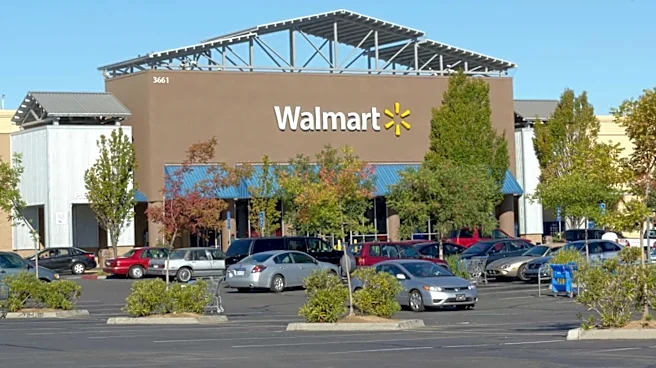
Wing, an Alphabet-owned drone delivery company, is set to launch its service from a Walmart store within 30 nautical miles of Salt Lake City International Airport in early 2027. This expansion follows successful operations in Texas, Georgia, Florida,
and North Carolina. The service aims to deliver packages weighing up to 5 pounds to residents within a 6-mile radius of participating Walmart stores in under five minutes. Wing operates under an FAA Part 135 air carrier certificate, allowing it to conduct beyond-visual-line-of-sight flights and share airspace with traditional and recreational aircraft. The company utilizes two drone models, with the larger one capable of carrying up to 5 pounds and cruising at 60 miles per hour for a 12-mile round trip. Deliveries are initiated through the Walmart or Wing app, with Walmart employees preparing items and Wing operators planning efficient routes that avoid continuously flying over the same residential areas. The drones are designed to autonomously lower packages to a designated delivery zone and handle unexpected interactions without human piloting.
Why It's Important?
This expansion signifies a growing trend in last-mile delivery solutions, offering consumers unprecedented speed and convenience for small grocery items. The service could significantly alter consumer shopping habits, particularly for urgent or forgotten purchases, by eliminating the need for personal travel to stores. For Walmart, partnering with Wing enhances its competitive edge in the e-commerce and grocery sectors, providing a novel delivery option that could attract and retain customers. The integration of drone delivery into urban and suburban areas also highlights advancements in aviation technology and regulatory frameworks, as Wing operates with FAA approvals for beyond-visual-line-of-sight flights. The company's focus on community engagement and safety, including its ability to detect and avoid other aircraft, is crucial for public acceptance and the broader adoption of drone delivery services across the U.S. This initiative could also alleviate traffic congestion and reduce carbon emissions associated with traditional vehicle-based deliveries.
What's Next?
Wing plans to establish 270 'nest' locations nationwide in partnership with Walmart, indicating a significant scaling of its drone delivery operations across the U.S. The company will continue to engage with local municipalities to secure necessary permits and ensure community understanding of the technology before launching in new areas. As the service rolls out in Salt Lake City and other regions, Wing will likely refine its operational logistics, drone technology, and customer experience based on real-world feedback. The success of these expansions could pave the way for broader regulatory changes and increased investment in drone delivery infrastructure, potentially leading to more widespread adoption by other retailers and logistics companies. The ongoing development of autonomous delivery systems will also necessitate continuous advancements in air traffic management and safety protocols to ensure seamless integration into existing airspace.
Beyond the Headlines
The proliferation of drone delivery services like Wing's raises deeper questions about urban planning, noise pollution, and privacy. While the convenience is undeniable, the constant presence of drones in residential airspace could lead to concerns among residents regarding noise levels and visual intrusion. Furthermore, the data collected by these drones, including delivery locations and potentially visual information, could spark discussions about data privacy and security. The shift towards automated delivery also has implications for the labor market, potentially reducing the demand for traditional delivery drivers while creating new jobs in drone operation, maintenance, and software development. The environmental impact, while potentially positive in terms of reduced vehicle emissions, will need to be carefully assessed, considering the energy consumption of drone operations and the manufacturing footprint of the drones themselves. This technological advancement represents a significant step towards a more automated and on-demand economy, with both promising benefits and complex societal challenges.