

What's Happening?
Pandora has launched a new dedicated R&B station named 'AGENDA,' which aims to celebrate LGBTQ+ artists, stories, and culture year-round. The station, which debuted on November 25, is designed to place queer artistry at the forefront of the R&B genre,
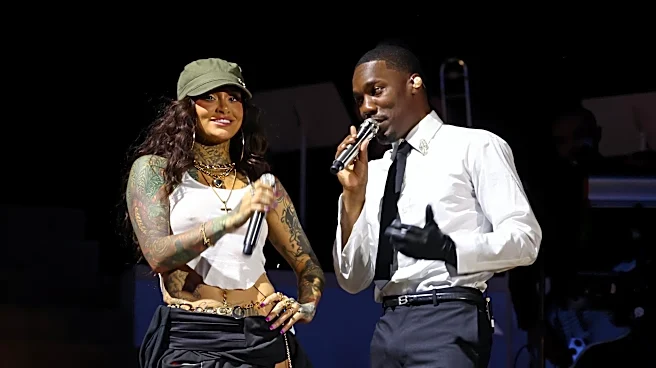
rather than on its periphery. Akim Bryant, Director of Music Programming and Head of R&B Programming at SiriusXM/Pandora, spearheaded the initiative, envisioning it as a long-overdue milestone in music programming. AGENDA features a diverse roster of artists, including foundational modern icons and rising voices such as Frank Ocean, Janelle Monáe, Kehlani, Victoria Monét, and Khalid. The station also incorporates exclusive artist commentary on identity, creative journeys, and community. This launch follows Pandora's previous efforts to champion LGBTQ+ voices through campaigns like 'Sounds Like Pride' and the multi-genre station 'Qmunity,' but AGENDA specifically addresses the need for a dedicated R&B platform, as data indicated 'Qmunity' leaned more towards pop.
Why It's Important?
The launch of AGENDA is significant as it provides a permanent and dedicated platform for queer R&B artists, offering them institutional credit and visibility that has often been lacking. This initiative challenges the traditional framing of queerness in music as a niche subcategory, instead integrating it as a core element of R&B. By highlighting artists who have shaped the genre's emotional core, vocal daring, and visual language, AGENDA aims to rectify historical oversights and provide a space for authentic storytelling. This move by Pandora could influence other streaming platforms to create more inclusive and genre-specific programming that caters to diverse communities. It also underscores a growing recognition within the music industry that sexual identity does not diminish artistic merit and that audiences are increasingly receptive to diverse voices. The station's focus on engagement over streaming metrics suggests a commitment to fostering a deeper connection between artists and listeners, potentially setting a new standard for how success is measured in specialized music programming.
What's Next?
The success of AGENDA will likely be measured by its engagement with both queer artists and allies, rather than solely by streaming numbers. Pandora plans to continuously discover and feature new queer talent, making the station a dynamic platform for emerging voices in R&B. This ongoing commitment to discovery and artist commentary will likely foster a strong community around the station. The initiative could also inspire other music platforms to re-evaluate their programming strategies and consider creating more dedicated spaces for underrepresented communities within specific genres. Furthermore, the station's emphasis on reclaiming the word 'agenda' around career purpose and artistic intention may encourage broader conversations about representation and authenticity in the music industry. The continued evolution of audience preferences, which increasingly value diverse identities, suggests that similar initiatives may gain traction across the entertainment landscape.
Beyond the Headlines
The creation of AGENDA reflects a deeper cultural shift towards greater inclusivity and recognition of LGBTQ+ contributions in mainstream media. Historically, queer artists in R&B and other genres often had to use coded lyricism or radical stagecraft to express their identities. This new station provides an explicit and celebrated space for queer narratives, moving beyond subtle allusions to direct and unapologetic storytelling. It highlights the ethical imperative for media platforms to reflect the diversity of their audiences and the artists they feature. Legally, such initiatives can contribute to a more equitable music industry by ensuring that artists from marginalized communities receive proper recognition and compensation. Culturally, AGENDA reinforces the idea that queer identity is not a separate category but an integral part of the rich tapestry of R&B, influencing its evolution and future direction. This move by Pandora could also spark broader discussions about how historical contributions of queer artists are acknowledged and integrated into music history.