






What's Happening?
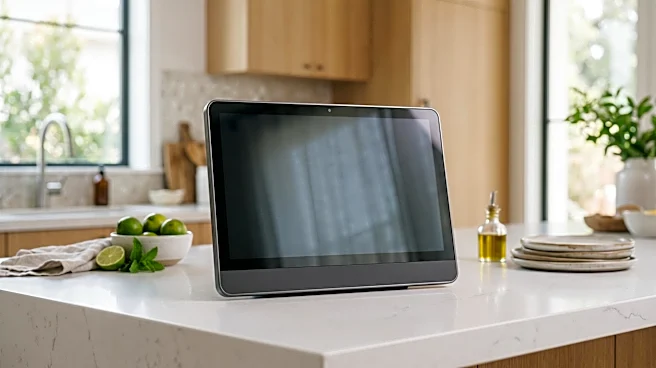
Amazon has launched the Echo Show 16, a new smart display designed to function as a central household computer. Priced at $499.99, this device aims to serve as a shared screen for families to manage daily activities. The Echo Show 16 incorporates Amazon’s
Omnisense technology, which can detect presence, temperature, and room acoustics within the home. It offers features such as meal planning, a full Fire TV experience, and a color-coded household calendar. Unlike Apple's HomeView, which focuses on individual users, Amazon's approach with the Echo Show 16 is centered on the household as the primary user, providing broad functionalities accessible to all family members without requiring a personal smartphone for setup.
Why It's Important?
The Echo Show 16 represents a significant evolution in the smart display market, positioning itself as a comprehensive household management tool. By focusing on communal use and integrating advanced sensing technologies, Amazon is addressing the long-standing need for a central digital hub in homes. This device could streamline household operations, from managing schedules and meal planning to monitoring home security through Ring cameras. The emphasis on the household as the user differentiates it from personal-centric smart devices, potentially making it more appealing to families seeking a shared digital interface. This move could also intensify competition in the smart home sector, pushing other companies to develop more integrated and household-focused solutions.
What's Next?
The success of the Echo Show 16 will likely influence future developments in smart display technology. Amazon may continue to enhance its Omnisense technology and expand the device's integration with other smart home products and services. Future updates could include more sophisticated AI for household management and personalized experiences for different family members. Competitors, particularly those with a strong presence in the smart home market, may respond by developing similar household-centric devices or by improving the multi-user capabilities of their existing products. This could lead to a new wave of innovation in smart displays, with a greater focus on shared utility and comprehensive home integration.
Beyond the Headlines
The emergence of devices like the Echo Show 16 raises broader questions about the future of household organization and the role of technology in family life. As smart displays become more integrated into daily routines, they could reshape how families communicate, manage tasks, and interact with their living spaces. There are also implications for data privacy, as these devices collect extensive information about household activities and presence. The balance between convenience and privacy will be a critical consideration for consumers and regulators. Furthermore, the shift towards a 'family computer' model could impact digital literacy across generations, as even young children become accustomed to interacting with advanced smart home interfaces.