




What's Happening?
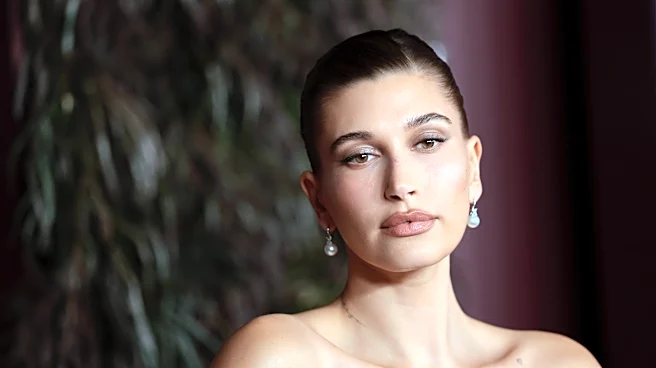
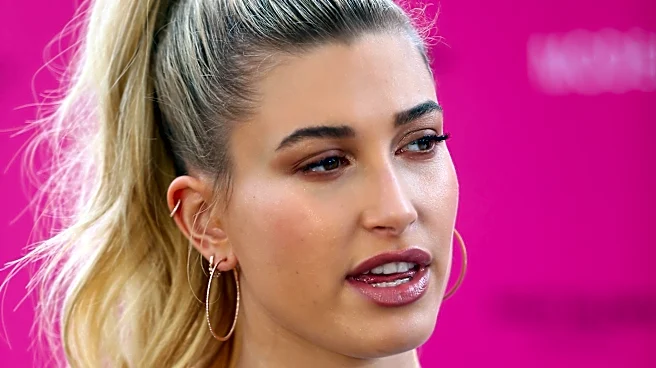
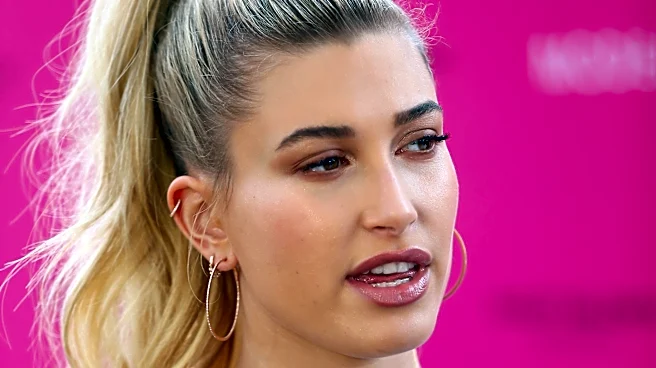
Hailey Bieber, the 30-year-old founder of Rhode, recently addressed criticism stemming from her comments at the New York Times' DealBook Summit. During the summit, Bieber stated that 'optimistical delusion' was a factor in her decision to sell her skincare
company to e.l.f. Beauty for $1 billion. This phrase drew significant backlash on social media, with many questioning her word choice. In response, Bieber shared the dictionary definition of 'optimistical' on her Instagram Story, clarifying that it means 'a version of optimistic.' This incident is not the first time Bieber has faced public scrutiny; she also reflected on the intense online hate she received in 2018 when she began dating Justin Bieber, including death threats and public harassment. She described feeling that 'maybe it would be better if I wasn't here anymore' due to the intensity of public sentiment.
Why It's Important?
This event highlights the ongoing challenges public figures face in managing their image and communications in the digital age, especially concerning social media scrutiny. Bieber's experience underscores how quickly public comments, even seemingly minor linguistic choices, can be amplified and criticized, impacting personal and professional reputations. For entrepreneurs, it also brings to light the pressure to articulate business success in a way that resonates positively with the public, as any misstep can lead to widespread negative commentary. The discussion around 'optimistical delusion' also touches on broader perceptions of wealth and success in the beauty industry, where public figures often face skepticism regarding their business acumen. Furthermore, Bieber's candid remarks about past online harassment shed light on the severe mental health toll that constant public judgment and cyberbullying can inflict on individuals in the public eye.
What's Next?
In the immediate future, Hailey Bieber is likely to continue navigating public perception, particularly as her beauty brand, Rhode, integrates further with e.l.f. Beauty. Her public statements and social media activity will remain under close watch, and she may choose to be more cautious in her phrasing during future public appearances. The incident could also prompt further discussions within the celebrity and business communities about effective communication strategies and resilience in the face of online criticism. For her brand, the controversy might lead to increased scrutiny of its marketing and public relations efforts. Bieber's continued openness about her experiences with online hate may also contribute to broader conversations about mental health and cyberbullying, potentially influencing how public figures and their teams approach social media engagement and crisis management.
Beyond the Headlines
Beyond the immediate controversy, this situation reflects deeper societal trends regarding language, authenticity, and public judgment in the digital sphere. The debate over Bieber's use of 'optimistical' highlights how language can be policed and scrutinized, especially when spoken by public figures. It also raises questions about the perceived authenticity of celebrity entrepreneurs and the public's expectation for them to conform to certain intellectual or linguistic standards. The intense backlash Bieber has faced throughout her career, particularly concerning her relationship with Justin Bieber, points to a broader cultural phenomenon of parasocial relationships and the often-unforgiving nature of fan bases. This ongoing scrutiny underscores the psychological burden placed on individuals constantly in the public eye, prompting a re-evaluation of the boundaries between public interest and personal privacy in the age of pervasive social media.