




What's Happening?
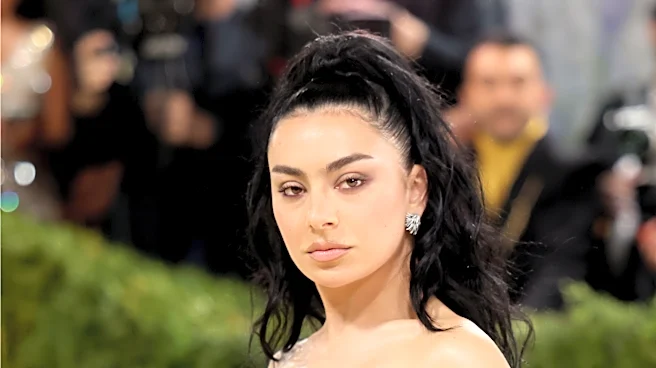
Charli XCX, the British pop star known for her rebellious and energetic music, has been honored with a portrait in London's National Portrait Gallery (NPG). The photograph, taken by renowned fashion photographer Harley Weir, captures the essence of Charli XCX's
'Brat' era, a period marked by her 2024 double-platinum album. The image, which shows the singer in a dynamic pose with tousled hair and a cropped t-shirt, is part of the NPG's 'History Makers' gallery. This inclusion is part of the museum's 'Collecting the Now' initiative, supported by a significant donation from the Bukhman Foundation. The initiative aims to acquire contemporary works, reflecting the evolving cultural landscape.
Why It's Important?
The inclusion of Charli XCX's portrait in the National Portrait Gallery signifies a recognition of contemporary cultural icons alongside historical figures. This move highlights the gallery's commitment to reflecting modern influences and diversifying its collection. For Charli XCX, this acknowledgment cements her status as a significant cultural figure, influencing music and fashion. The portrait's presence in such a prestigious institution underscores the impact of pop culture on traditional art spaces, bridging the gap between historical and modern artistic expressions. This development may encourage other institutions to similarly embrace contemporary figures, broadening the scope of cultural representation.
What's Next?
The National Portrait Gallery's 'Collecting the Now' initiative will likely continue to expand its collection with contemporary works, potentially including more figures from diverse backgrounds and industries. This could lead to increased public interest and engagement with the gallery, as it becomes more representative of current cultural dynamics. For Charli XCX, this recognition may open further opportunities in the art world, possibly leading to collaborations with other artists and institutions. The gallery's approach could inspire similar initiatives globally, promoting a more inclusive and comprehensive portrayal of modern culture in art institutions.