





What's Happening?
The automotive logistics sector is facing immense pressure from a 'new normal' characterized by tariff and trade uncertainty, geopolitical conflicts, rising costs, driver and freight capacity shortages, and significant demand volatility. Industry experts
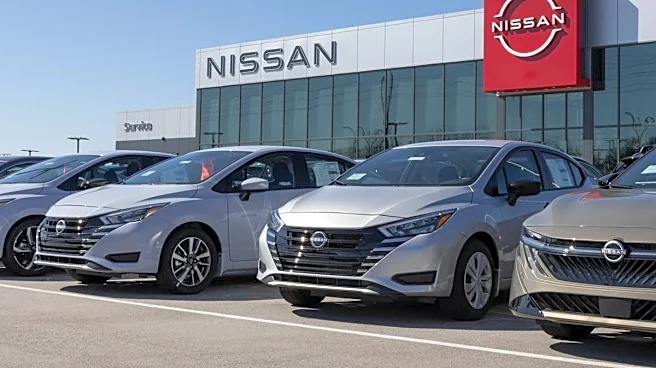
at the Automotive Logistics & Supply Chain Global conference in Plymouth, Michigan, discussed how original equipment manufacturers (OEMs) and logistics partners are evolving their strategies to adapt. Key challenges include shipping and air freight volatility, logistics provider consolidation, and supplier disruption. Companies like Nissan and Toyota are prioritizing end-to-end supply chain visibility, moving beyond just Tier 1 suppliers to map raw materials. This involves capturing, organizing, and utilizing data to identify gaps earlier and shift from reactive to proactive responses. Logistics providers, such as Ryder System and DP World, emphasize the importance of connection and breaking down data silos to enhance collaboration and anticipate risks.
Why It's Important?
The automotive industry's response to ongoing supply chain disruptions has significant implications for the U.S. economy, manufacturing sector, and consumer markets. The shift from purely lean logistics to a balance with resilience means that companies are re-evaluating cost-cutting measures against the need for robust supply networks. This could lead to increased investment in diversified sourcing, localized production, and advanced technologies like AI for better forecasting and risk management. For consumers, these changes might translate into more stable vehicle availability but potentially higher costs as companies absorb the expenses of building more resilient supply chains. The emphasis on end-to-end visibility and collaborative partnerships also signals a fundamental change in how automotive companies operate, fostering deeper integration with suppliers and logistics providers to navigate an unpredictable global landscape. This evolution is critical for maintaining competitiveness and ensuring the continuous flow of goods in a volatile environment.
What's Next?
The automotive industry is moving towards more collaborative and data-driven approaches to supply chain management. OEMs are increasingly involving logistics partners earlier in the planning process to co-create solutions and test alternatives for potential disruptions. The focus is on moving beyond a transactional model to one of shared mutual benefits, where partners work together to anticipate and mitigate risks. While lean logistics, such as Toyota's Just-in-Time (JIT) system, remains valuable for identifying problems quickly, there's a growing recognition that a 'one-size-fits-all' approach is insufficient. Companies will continue to invest in digitalization and AI to enable new ways of working, planning, and collecting data. This will lead to more autonomous supply chains, with AI monitoring operations, recommending actions, and executing routine workflows, though human oversight will remain crucial for strategic decisions. The goal is to achieve economically sufficient control over critical breakpoints, balancing global sourcing with regional and local alternatives where necessary.
Beyond the Headlines
The transformation in automotive supply chains reflects a broader re-evaluation of globalized production models. The traditional pursuit of maximum efficiency and cost reduction, often through lean and just-in-time systems, is being tempered by the imperative for resilience in the face of geopolitical instability and unforeseen events. This shift has profound implications for international trade relations, as countries and companies consider reshoring or nearshoring production to reduce dependencies on distant and potentially volatile regions. The increased focus on data visibility and AI integration also raises questions about data security, privacy, and the ethical use of artificial intelligence in managing complex global networks. Furthermore, the evolving nature of partnerships, moving towards deeper collaboration and shared risk, could redefine competitive landscapes and foster new ecosystems of innovation within the manufacturing and logistics sectors.