
What's Happening?
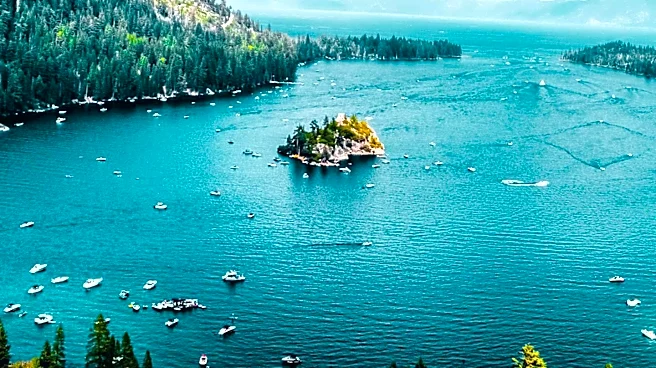
Lake McClure, a 7,000-acre reservoir in Central California's Sierra Nevada foothills, is being highlighted as an ideal destination for boating, paddling, and fishing, offering a less crowded alternative
to Lake Tahoe. Originally created in the 1920s and enlarged in the 1960s to provide water and electricity, Lake McClure has become a popular spot for various water activities. Its relatively low elevation of 867 feet allows it to remain open year-round and ensures water warm enough for comfortable swimming during warmer seasons. The lake features several protected swimming spots and shore access for swimmers. Additionally, its sister lake, Lake McSwain, hosts Splash-N-Dash, the country's largest splash pad waterpark, covering over 200,000 square feet with inflatable slides and jump platforms. The lake is fed by the Merced River, which originates in Yosemite, linking it to the popular national park.
Why It's Important?
Lake McClure's emergence as a prominent recreational destination offers significant benefits for regional tourism and local economies in Central California. By providing an alternative to more congested areas like Lake Tahoe, it can help distribute tourist traffic, potentially reducing environmental strain on overused natural resources while boosting economic activity in the Sierra Nevada foothills. The year-round accessibility and warm waters make it an attractive option for a broader range of visitors, including families and those seeking extended recreational seasons. The diverse fishing opportunities, with various trout and bass species, support local fishing industries and recreational angling, contributing to the region's outdoor sports economy. The presence of extensive camping facilities and a large waterpark further enhances its appeal, drawing in diverse visitor segments and supporting local businesses through increased demand for accommodation, supplies, and services.
What's Next?
Continued promotion and development of Lake McClure as a recreational hub are likely to attract more visitors, potentially leading to increased investment in local infrastructure and services. The focus on its year-round accessibility and diverse activities, including boating, fishing, and camping, suggests a sustained effort to position it as a premier destination. Local authorities and tourism boards may further enhance facilities and marketing efforts to capitalize on its growing popularity. The success of Lake McClure could also inspire similar initiatives in other less-utilized natural areas, aiming to balance recreational demand with environmental preservation. Monitoring visitor impact and ensuring sustainable practices will be crucial as its popularity grows, potentially leading to new regulations or conservation efforts to protect its natural resources.
Beyond the Headlines
The rise of Lake McClure as a recreational alternative reflects a broader trend in U.S. tourism towards seeking out less crowded, more accessible natural destinations. This shift can have profound implications for regional development, potentially revitalizing smaller communities near such lakes and fostering a more distributed tourism economy. Environmentally, it highlights the importance of managing recreational pressure across multiple sites to prevent over-tourism in iconic locations like Lake Tahoe. Culturally, it may foster a deeper appreciation for diverse natural landscapes beyond the most famous landmarks, encouraging exploration of lesser-known but equally beautiful areas. This trend also underscores the economic value of water resources beyond their primary uses for power and irrigation, emphasizing their role in recreation and quality of life.