








What's Happening?
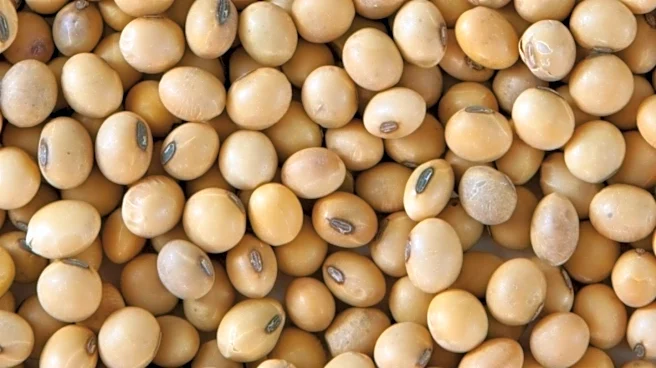
U.S. soybean futures have risen above $12 per bushel, driven by a nearly 3% surge in soyoil prices, reaching a six-week high. This increase is attributed to heightened demand for biofuel feedstock and recent U.S. soybean sales to China. The rise in prices is also
influenced by geopolitical tensions in the Black Sea region, where hostilities between Russia and Ukraine have disrupted grain exports, affecting wheat and corn futures. The Chicago Board of Trade reported that November soyoil settled at 72.43 cents a pound, marking a 2.6% increase. Additionally, new U.S. tariffs on Brazilian imports, including beef-tallow, have further boosted soyoil prices, as beef-tallow competes with soyoil for biodiesel production. Despite President Trump's allegations of Chinese interference in U.S. elections, Chinese buyers continue to purchase U.S. soybeans, indicating ongoing trade relations.
Why It's Important?
The surge in soybean and soyoil prices has significant implications for the U.S. agricultural sector and global trade. The increased demand for biofuel feedstock highlights the growing importance of renewable energy sources, potentially benefiting U.S. farmers and the biofuel industry. The geopolitical tensions in the Black Sea region underscore the vulnerability of global grain supply chains, which can lead to price volatility and impact food security. The continued purchase of U.S. soybeans by China, despite political tensions, suggests a complex interdependence between the two economies, with potential ramifications for future trade negotiations and economic policies.
What's Next?
If hostilities in the Black Sea region persist, further disruptions in grain exports could exacerbate price volatility in global markets. The U.S. agricultural sector may need to adapt to changing weather conditions, as recent heatwaves have potentially damaged crops in the Midwest. The forecast for milder temperatures and rain in the coming week may offer some relief. Additionally, the impact of new U.S. tariffs on Brazilian imports will be closely monitored, as it could influence the competitive landscape for biodiesel feedstock. Stakeholders in the agricultural and energy sectors will likely continue to assess these developments to mitigate risks and capitalize on emerging opportunities.