




What's Happening?
American consumers are entering the Thanksgiving holiday with increased optimism, as the Conference Board's Consumer Confidence Index rose by 11.4 points to 103.3 in November, up from 91.9 in October. This marks a return to confidence levels last observed
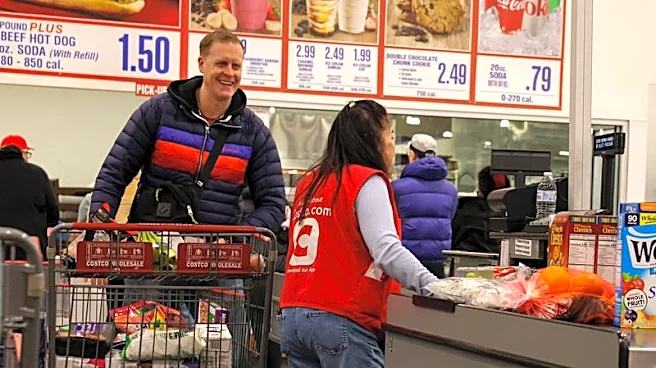
in January 2025. Both the Present Situation Index and the Expectations Index saw improvements, rising by 13.7 points to 132.8 and 9.9 points to 83.6, respectively. This surge in confidence is accompanied by consumers planning slightly higher spending on goods and vacations. Major retailers, including Best Buy Co., Inc., DICK'S Sporting Goods, Inc., Dollar Tree, Inc., and Walmart Inc., have reported strong third-quarter results, with increased revenues and raised fiscal guidance, further contributing to the positive retail outlook for the holiday season.
Why It's Important?
The significant increase in U.S. consumer confidence is a crucial indicator for the health of the American economy, particularly as the holiday shopping season commences. Elevated confidence typically translates into higher consumer spending, which is a primary driver of economic growth. The National Retail Federation predicts a 4.2% growth in retail sales for November and December over 2025, totaling $1.013 trillion, while Adobe forecasts a record $275.1 billion in U.S. holiday online spending. This positive outlook benefits a wide range of industries, from retail and e-commerce to logistics and manufacturing. Strong consumer spending can lead to increased corporate profits, job creation, and overall economic stability. Conversely, a decline in confidence could signal economic headwinds, making this upward trend particularly important for businesses and policymakers alike.
What's Next?
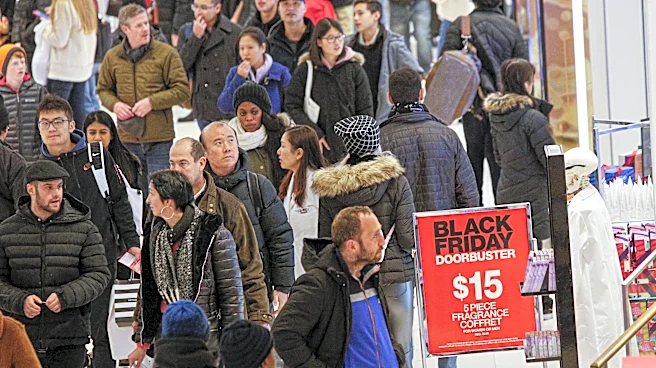
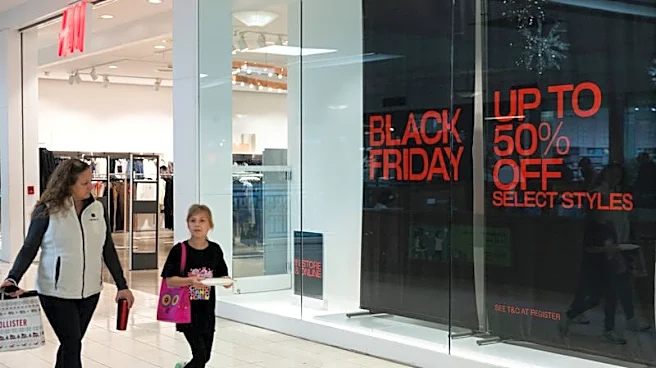
With the U.S. stock markets observing holiday hours, the immediate focus will shift to actual consumer behavior during Black Friday and Cyber Monday. These key shopping days will provide the first real-time data on whether the increased consumer confidence translates into the predicted surge in retail sales. Retailers will be closely monitoring these figures to adjust inventory, marketing strategies, and staffing for the remainder of the holiday season. The strong third-quarter results from major retailers like Best Buy, DICK'S Sporting Goods, Dollar Tree, and Walmart suggest a robust foundation, but the ultimate success of the holiday season will depend on sustained consumer engagement. Future economic reports and consumer sentiment surveys will continue to be vital in assessing the long-term trajectory of consumer spending and its impact on the U.S. economy.
Beyond the Headlines
The rebound in consumer confidence, reaching levels not seen since early 2025, suggests a potential turning point in consumer sentiment following a period of economic uncertainty. This renewed optimism could be attributed to various factors, including stable employment, moderating inflation, or a general sense of economic stability. However, the sustainability of this confidence will be crucial. Factors such as geopolitical events, interest rate changes, and supply chain disruptions could still influence consumer behavior. The strong performance of discount retailers like Dollar Tree, alongside broader retail gains, indicates that consumers are still value-conscious, even with increased confidence. This suggests a nuanced approach to spending, where consumers are willing to spend more but are also seeking optimal value. Understanding these underlying motivations will be key for businesses aiming to capture market share in a dynamic retail landscape.