




What's Happening?
Kelly Ortberg, CEO of Boeing, announced on October 27, 2026, that the company would not meet its annual aircraft delivery target of 500 units. Additionally, the goal of achieving $10 billion in annual free cash flow has been postponed from its original
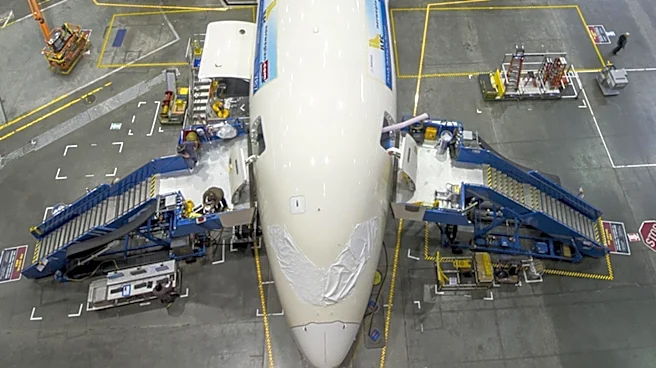
timeline to 2029. Ortberg assumed the CEO position in August 2024 with the primary objectives of increasing aircraft deliveries and reducing company debt. Despite these aims, Boeing's manufacturing facilities have struggled to maintain a monthly production rate of 47 aircraft, falling short of the desired increase to 52 aircraft per month. This announcement led to a significant decline in Boeing's stock, with shares falling by 10.7% on the day of the disclosure. The pressure to accelerate production, a factor that contributed to previous company challenges, continues to influence strategic decisions.
Why It's Important?
This development is significant for Boeing and the broader aerospace industry, as it highlights ongoing production challenges within one of the world's leading aircraft manufacturers. The inability to meet delivery targets can strain relationships with airline customers, potentially leading to penalties or a loss of future orders. The delay in achieving the $10 billion free cash flow milestone signals a longer path to financial stability and profitability than investors had anticipated, directly impacting shareholder confidence and the company's valuation. The 10.7% drop in Boeing's shares reflects investor concern over the company's operational efficiency and its ability to execute its strategic plans. This situation also underscores the inherent tension between investor demands for accelerated production and the practical realities of manufacturing complex aircraft, a balance that Ortberg is navigating under considerable scrutiny.
What's Next?
Following this announcement, Boeing will likely face increased pressure from investors and analysts to outline a revised strategy for improving production rates and achieving its financial targets. The company may need to implement operational changes within its factories to address the bottlenecks preventing increased output. Investors will be closely watching for updates on production efficiency, supply chain management, and any potential adjustments to its aircraft development programs. Furthermore, the delay in reaching the free cash flow target could influence Boeing's capital allocation decisions, potentially affecting investments in new technologies, share buybacks, or dividend policies. The market will be looking for clear indications of how Boeing plans to regain momentum and restore investor confidence in its long-term growth prospects.
Beyond the Headlines
The challenges faced by Boeing under Kelly Ortberg's leadership extend beyond immediate financial metrics, touching upon deeper issues within the aerospace manufacturing sector. The persistent pressure to accelerate production, despite previous negative consequences, highlights a systemic tension between short-term financial incentives and long-term operational integrity and safety. This situation raises questions about corporate governance and the influence of investor expectations on manufacturing decisions. Ortberg's experience underscores the difficulty of making sound long-term strategic choices when immediate financial pressures favor potentially risky shortcuts. The broader implication is a continued debate within the industry about sustainable growth models that prioritize both financial performance and robust operational practices, especially in a sector where safety and quality are paramount.