








What's Happening?
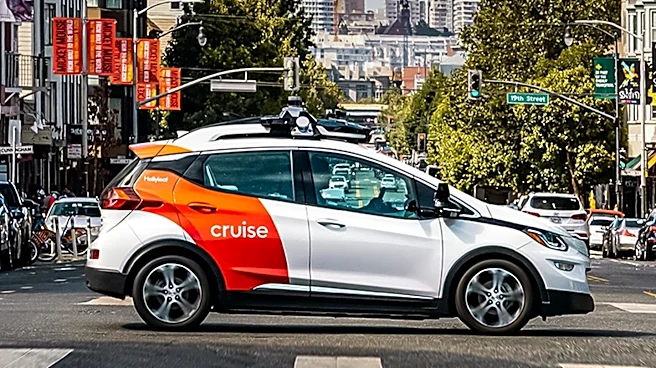
The United Nations has adopted the first global regulations for fully autonomous vehicles, establishing uniform international safety requirements. This development aims to address the fragmented national approaches to regulation that have previously hindered
the progress of self-driving cars. The regulations were introduced by the World Forum for Harmonisation of Vehicle Regulations at the UN in Geneva. The framework is designed to ensure that automated systems meet rigorous safety standards, thereby strengthening trust among governments, industry, and the public. The regulations require manufacturers to ensure testing meets strict criteria and to implement audited safety governance throughout the lifecycle of autonomous driving systems. The framework is expected to enter into force in January 2027, with major auto markets like the United States, China, and the European Union backing the move.
Why It's Important?
The adoption of these global regulations is a significant milestone for the autonomous vehicle industry, potentially accelerating the deployment of self-driving cars worldwide. By providing a unified regulatory framework, the UN aims to eliminate barriers that have previously restricted the market expansion of autonomous vehicles. This could lead to increased investment and innovation in the sector, benefiting manufacturers and technology companies. The regulations also aim to enhance public trust in autonomous vehicles by ensuring high safety standards, which is crucial for widespread acceptance. The move could have substantial economic implications, as the autonomous vehicle market is expected to grow significantly, with projections of up to 3 million robotaxis in major cities by 2035.
What's Next?
With the regulations set to take effect in January 2027, manufacturers are expected to begin aligning their development processes with the new standards. This could lead to a surge in the production and deployment of autonomous vehicles, particularly in markets that have been supportive of the technology. The framework's implementation will likely prompt further discussions among stakeholders, including governments, industry leaders, and consumer advocacy groups, to ensure the regulations are effectively enforced. Additionally, as the technology evolves, there may be further updates to the regulatory framework to address new challenges and opportunities in the autonomous vehicle sector.