


What's Happening?
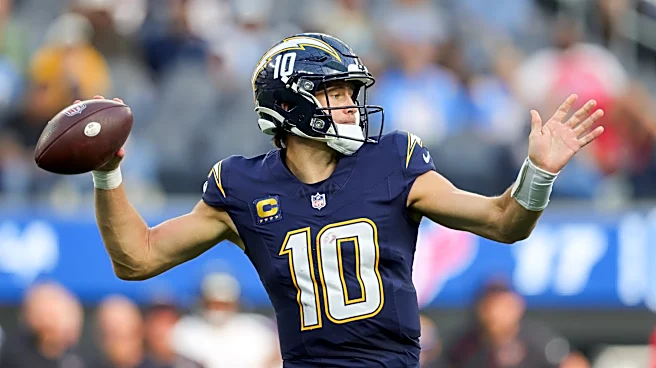
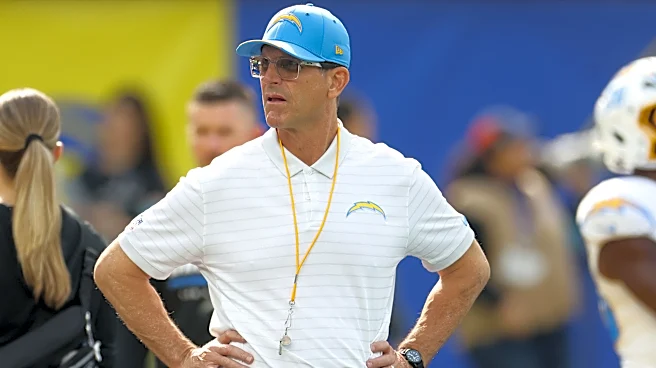
The Los Angeles Chargers' owner, Dean Spanos, is under scrutiny following the team's decision to not be sellers at the recent NFL trade deadline, despite a dismal 0-8 start to the season. This strategy, reportedly influenced by assurances given to coach
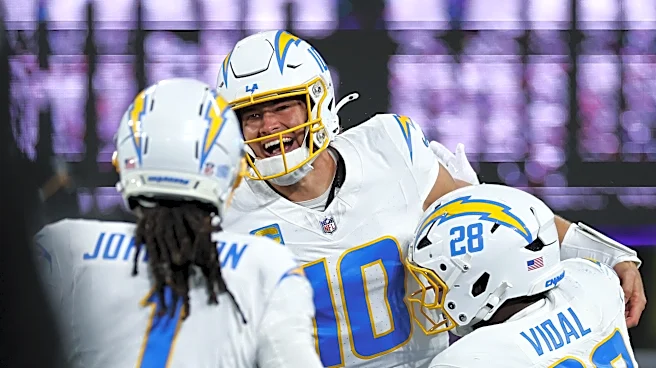
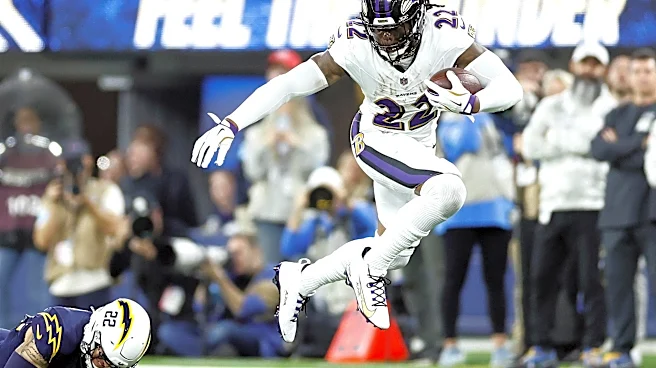
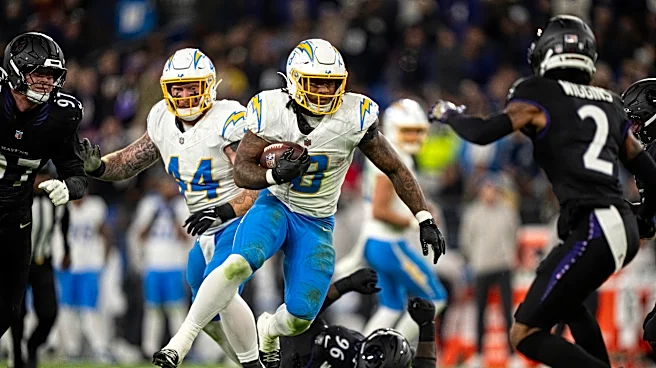
Jim Harbaugh about his job security, has drawn criticism for not prioritizing the franchise's future. The team's general manager, Joe Hortiz, is also implicated in these decisions. The Chargers eventually secured their first win of the season against Baltimore, moving their record to 1-8. However, this win potentially jeopardizes their position for a top pick in the upcoming NFL draft, specifically a chance to draft a highly-touted wide receiver like Jeremiah Smith. The team's management is being criticized for focusing on a 'triumphant comeback story' rather than making strategic moves to rebuild through draft capital, which is often favored by struggling teams.
Why It's Important?
This situation highlights a critical debate within professional sports franchises regarding short-term competitiveness versus long-term strategic rebuilding. By reportedly assuring Coach Harbaugh's job security and opting out of selling veteran players at the trade deadline, the Chargers' ownership and management have signaled a commitment to their current leadership and roster, despite poor performance. This approach could have significant implications for the team's future competitiveness and fan engagement. Failing to acquire additional draft capital through trades might hinder their ability to secure top-tier talent in the draft, potentially prolonging their rebuilding phase. Furthermore, the decision raises questions about accountability within the organization, as the team's struggles continue. The perceived lack of a clear long-term vision could impact player morale, future free-agent acquisitions, and the overall financial health of the franchise.
What's Next?
The immediate future for the Chargers involves navigating the remainder of the current NFL season with a roster that was not significantly altered at the trade deadline. The team's performance in the remaining games will be closely watched, particularly how coach Jim Harbaugh and general manager Joe Hortiz manage the team. If the team continues to struggle, pressure on Spanos to make significant changes in the offseason will likely intensify, regardless of any prior assurances. The upcoming NFL draft will be a critical juncture, as the team's draft position will dictate their access to top collegiate talent. The decisions made regarding player personnel and coaching staff in the offseason will be crucial in determining the franchise's direction and whether they can effectively address the issues that have plagued them this season.
Beyond the Headlines
The Chargers' current predicament extends beyond typical on-field performance issues, touching upon deeper organizational philosophy and the psychology of sports management. The reported emphasis on a 'comeback story' rather than pragmatic rebuilding reflects a potential disconnect between ownership's aspirations and the strategic realities of team development in the NFL. This approach can lead to a cycle of mediocrity if not carefully managed, as it prioritizes immediate narrative over sustainable success. Ethically, the decision to potentially sacrifice a high draft pick for a late-season win, especially when the team is out of playoff contention, raises questions about the organization's commitment to its long-term competitive health. This situation could also influence how other struggling franchises approach trade deadlines, potentially reinforcing or challenging the conventional wisdom of 'selling' for future assets.