





What's Happening?
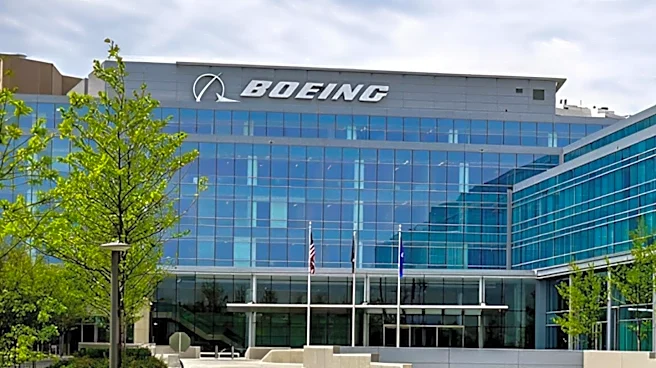
Boeing Commercial Airplanes announced a 5% reduction in its workforce, impacting approximately 2,500 positions. This decision comes as the company faces challenges in increasing aircraft production as quickly as planned. The cuts will be implemented through
a combination of attrition and involuntary layoffs, though the specific breakdown has not been provided. Stephanie Pope, division president and CEO of Boeing Commercial Airplanes, stated that the company needs to "reset the pace of our production rate ramps to provide our factories and supply chain partners additional time to achieve stability." This adjustment in production schedules has resulted in an overstaffed position. The announcement follows previous acknowledgments from Boeing CEO Kelly Ortberg that stabilizing production at targeted rates is taking longer than anticipated, with full stability expected to extend into the next year. Wing production has been identified as a bottleneck, hindering further production increases. Layoff notifications are scheduled to begin in December, and union representatives are set to meet with Boeing leadership to discuss the impact on their members.
Why It's Important?
This workforce reduction at Boeing Commercial Airplanes signifies ongoing struggles within a major U.S. aerospace manufacturer, with potential ripple effects across the industry and the broader economy. The slowdown in aircraft production, particularly for the 737 MAX line, could impact airlines awaiting new deliveries, potentially affecting their operational capacity and expansion plans. For the U.S. manufacturing sector, this move highlights challenges in supply chain stability and production efficiency, which could influence investor confidence and future employment trends in high-tech manufacturing. The decision to reduce staff, even partially through attrition, indicates a cautious outlook on immediate production ramp-ups, suggesting that the company's recovery from past issues, including a machinists' strike and a door-plug blowout, is more protracted than initially hoped. This situation could also affect the numerous suppliers and partners in Boeing's ecosystem, as reduced production rates translate to lower demand for components and services. The uncertainty surrounding the number of involuntary layoffs versus attrition also creates anxiety for employees and local economies dependent on Boeing's presence.
What's Next?
Boeing is expected to begin issuing layoff notifications in December, which will clarify the extent of involuntary job losses. Union representatives for SPEEA IFPTE Local 2001 are scheduled to meet with Boeing leadership on November 19 to discuss the implications for their members, and details will be shared as they become available. The company aims to reach a production rate of 52 737 aircraft per month in the second half of 2027, indicating a prolonged period before full production stability is achieved. Industry observers, such as Scott Hamilton of the Leeham Company, suggest that these workforce reductions could further delay Boeing's recovery, potentially pushing it out by at least a year. The focus will remain on how Boeing addresses the identified bottlenecks, particularly in wing production, and how effectively it can stabilize its supply chain to meet future production targets. The impact on the Puget Sound region, a significant hub for Boeing's operations, will also be closely watched as the company implements these changes.
Beyond the Headlines
The workforce reduction at Boeing Commercial Airplanes extends beyond immediate job losses, touching upon deeper issues within the aerospace industry and U.S. manufacturing. The company's struggle to stabilize and increase production, despite strong demand for commercial aircraft, points to systemic challenges in managing complex global supply chains and maintaining manufacturing efficiency. This situation could prompt a re-evaluation of production strategies and supply chain resilience across the aerospace sector, potentially leading to increased automation or diversification of suppliers to mitigate future disruptions. Ethically, the balance between maintaining a stable workforce and adjusting to production realities presents a dilemma for large corporations, especially in industries with long lead times and high capital investment. The long-term implications could include a shift in how aerospace companies manage their workforce during periods of fluctuating demand and production challenges, potentially influencing labor relations and union negotiations. Furthermore, the incident underscores the critical importance of quality control and safety in aircraft manufacturing, as past events have significantly impacted Boeing's production timelines and public trust.