




What's Happening?
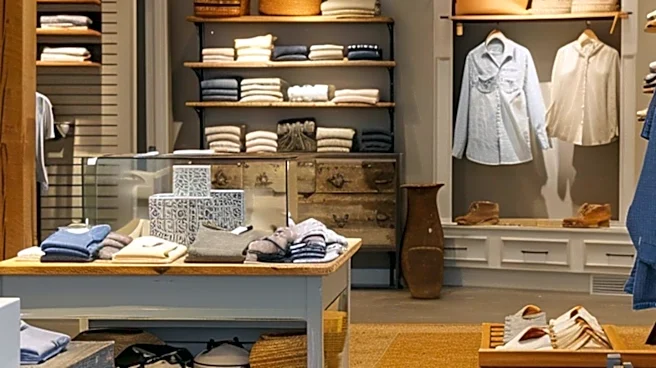
L.L.Bean has officially reopened its flagship store in Freeport, Maine, following a four-year, $50 million renovation project. The store, which typically operates 24/7, was closed for nearly two years during the extensive upgrade. The revamped store now
features a new two-tiered trout pond and a prominent first-floor footwear department. An expanded lobby and a grand staircase lead to the second floor, where an atrium-style mezzanine offers views of the pond and main entrance. The stream tank, home to rainbow, brown, and brook trout, includes a clear plastic bubble for children and smaller adults to experience an underwater view. Shawn Gorman, L.L.Bean’s board chairman and great-grandson of founder Leon Leonwood Bean, stated that the renovation honors the company's heritage while looking to the future. The project aimed to update the original 1912 location and streamline the store's layout, which had become disjointed due to additions over the years. The renovation was designed by WBRC of Portland, Arrowstreet of Boston, and Sebago Technics of South Portland, with Zachau Construction of Freeport as the lead contractor.
Why It's Important?
The reopening of L.L.Bean's flagship store is a significant event for both the company and the local economy of Freeport, Maine. As a major tourist attraction and a symbol of outdoor lifestyle, the store draws visitors from across the U.S. and beyond. The substantial investment of $50 million in the renovation underscores L.L.Bean's commitment to physical retail and enhancing the customer experience in an increasingly digital marketplace. The updated design, with its focus on immersive elements like the trout pond and improved navigation, aims to create a more engaging and memorable shopping environment. This investment can boost local tourism and economic activity in Freeport, benefiting other businesses in the area. Furthermore, the renovation reinforces L.L.Bean's brand identity as a gateway to the outdoors, aligning its physical space with its core values and product offerings. The store serves as a critical touchpoint for the brand, influencing customer perception and loyalty across its 73 U.S. stores, 18 in Japan, and 16 in Canada.
What's Next?
The grand reopening will be celebrated with a six-week event series, starting with concerts by country artist Kip Moore and rock band The Wallflowers. The celebration will include themed weekends, such as Heritage Weekend showcasing vintage L.L.Bean apparel, Makers Weekend featuring crafts, and Home Team Weekend with appearances by a Red Sox legend and Maine’s Hearts of Pine soccer team. These events are designed to attract visitors and highlight the new and improved aspects of the renovated store. The streamlined layout, including a single checkout area and reorganized departments, is expected to enhance the shopping experience and operational efficiency. The success of this renovation could serve as a model for future retail investments by L.L.Bean and other companies looking to revitalize their physical store presence. The company will likely monitor customer feedback and sales performance to assess the impact of the extensive upgrade on its overall business strategy and brand engagement.
Beyond the Headlines
The L.L.Bean renovation reflects a broader trend in retail where experiential shopping is becoming increasingly vital. In an era dominated by e-commerce, physical stores are transforming into destinations that offer more than just products; they provide unique experiences that foster brand loyalty and community engagement. The inclusion of elements like the trout pond and interactive displays speaks to a strategy of creating memorable moments that cannot be replicated online. This approach is crucial for legacy brands like L.L.Bean to remain relevant and competitive. The renovation also highlights the importance of a strong connection to local heritage and natural surroundings, reinforcing the brand's authenticity. By making the store a 'center of the community,' as noted by a local resident, L.L.Bean is investing in its role as a cultural landmark, not just a retail outlet. This blend of commerce, community, and experience is a key differentiator in the evolving retail landscape.