







What's Happening?
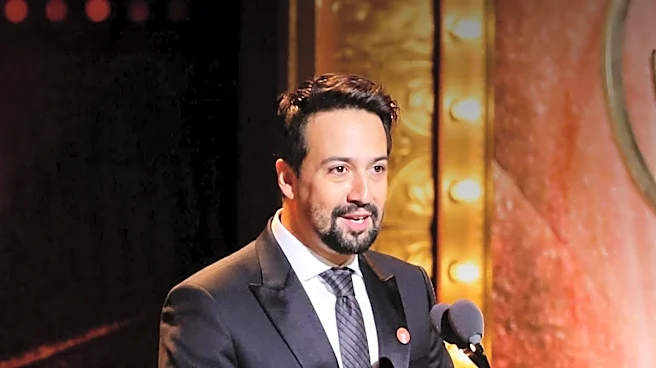
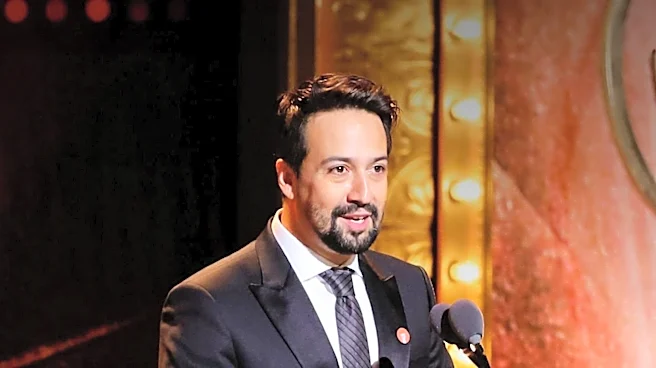
Lin-Manuel Miranda is credited with the book, music, and lyrics for the musical 'Hamilton.' The 'book' of a musical refers to its dramatic script, encompassing the story, scenes, spoken dialogue, and action. While a single writer can hold multiple credits,
these roles are distinct. For instance, in 'Hamilton,' Miranda is responsible for all three components, whereas other musicals like 'Wicked' have separate writers for the book (Winnie Holzman) and music/lyrics (Stephen Schwartz), with the source novel by Gregory Maguire. 'Hamilton' is based on Ron Chernow's biography of Alexander Hamilton, a distinction noted in The Broadway League's listing for the production. The musical tells the story of Alexander Hamilton, an immigrant from the West Indies who became a key figure during the Revolutionary War.
Why It's Important?
Understanding the distinct roles of book writer, composer, and lyricist is crucial for appreciating the collaborative and intricate nature of musical theater. Lin-Manuel Miranda's achievement in handling all three aspects for 'Hamilton' is notable, demonstrating a comprehensive artistic vision and control over the production's narrative and musical identity. This integrated approach allowed for a cohesive and innovative storytelling style that blended historical narrative with contemporary musical forms. The success of 'Hamilton' has set a precedent, showcasing how a single creative force can profoundly shape a musical's impact, influencing how future productions might approach creative team structures and credit assignments in the U.S. and globally.
What's Next?
The clarity around musical credits, as exemplified by 'Hamilton,' will likely continue to inform how theatrical productions are developed and presented. Future artists may be inspired by Miranda's multi-faceted role, potentially leading to more integrated creative processes in musical theater. This understanding also helps audiences and critics better appreciate the specific contributions of each creative team member, fostering a more informed discourse around theatrical works. The ongoing discussion about the 'book' of a musical, even in sung-through productions, emphasizes the enduring importance of dramatic structure and storytelling in the art form.
Beyond the Headlines
The discussion of 'book, music, and lyrics' extends beyond mere credit assignment; it delves into the fundamental elements that make a musical successful. 'Hamilton' exemplifies how a strong 'book'—the dramatic script—can elevate a production, even when seamlessly integrated with music and lyrics. Miranda's ability to craft a compelling narrative, engaging dialogue, and memorable songs from a historical biography highlights the power of storytelling in theater. This approach has not only garnered critical acclaim but also made complex historical figures accessible and relatable to a broad audience, demonstrating the educational and cultural impact of well-crafted musical theater.