



What's Happening?
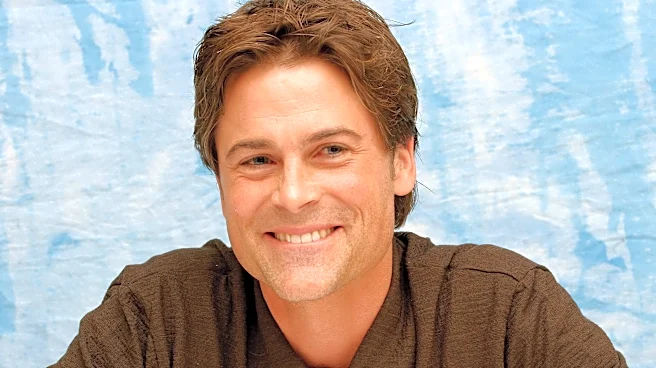
Actor Rob Lowe has publicly defended his decision to star in the film 'Confession,' which was written by conservative pundit Ben Shapiro. Speaking on the 'Second Thought' podcast, Lowe, 62, addressed the backlash he received for working with Shapiro,
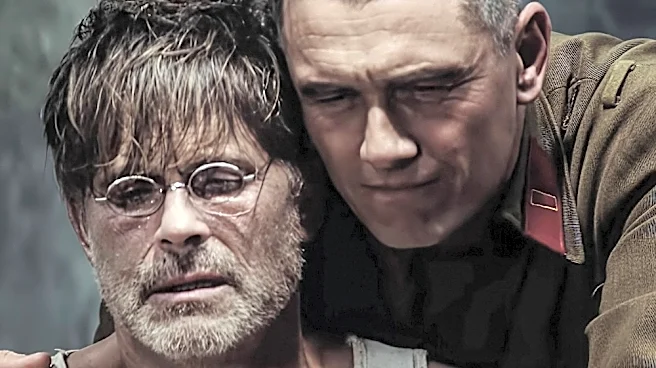
42, known for his right-wing political views. Lowe stated that his primary motivation was the script's quality, not the writer's politics. He recounted telling Shapiro that he was comfortable working with writers across the political spectrum. 'Confession,' a psychological historical drama directed by Václav Marhoul, features an interrogation in a Stalin-era Russian jail and also stars Nick Nolte, James Franco, and Emile Hirsch. The film premiered at the Warsaw Film Festival and was released on The Daily Wire's streaming platform after struggling to secure wider festival distribution.
Why It's Important?
This situation highlights the increasing intersection and potential friction between entertainment and political ideologies in the U.S. Lowe's defense underscores a debate within Hollywood and the broader public about whether artistic collaborations should be judged solely on merit or if the political views of creators should influence participation. The film's difficulty in securing wider festival acceptance, which Lowe attributes to political considerations, suggests a growing politicization of cultural institutions. This could lead to a more fragmented entertainment landscape, where content is increasingly produced and consumed within ideologically aligned platforms, potentially limiting exposure to diverse perspectives and fostering cultural echo chambers.
What's Next?
The controversy surrounding 'Confession' and Lowe's stance may prompt further discussions within the entertainment industry about artistic freedom versus political alignment. It could encourage more creators to consider the political implications of their collaborations, potentially leading to more self-censorship or, conversely, a greater willingness to challenge perceived ideological boundaries. The success or failure of films distributed through platforms like The Daily Wire will also be closely watched, as it could indicate the viability of alternative distribution channels for projects that face resistance from mainstream outlets. This trend might lead to a more diverse range of voices and stories reaching audiences, albeit through less conventional routes.
Beyond the Headlines
The 'Confession' controversy touches upon deeper issues concerning artistic integrity, freedom of expression, and the impact of political polarization on cultural production. It raises questions about whether artists should be expected to align their professional choices with their personal or public political views, or if art should transcend such divisions. The perceived 'blacklisting' of the film from festivals, as suggested by Lowe, could signal a chilling effect on creative risk-taking and intellectual diversity within the arts. This development might also encourage the growth of parallel cultural industries that cater to specific political demographics, further entrenching ideological divides within American society and its cultural output.