






What's Happening?
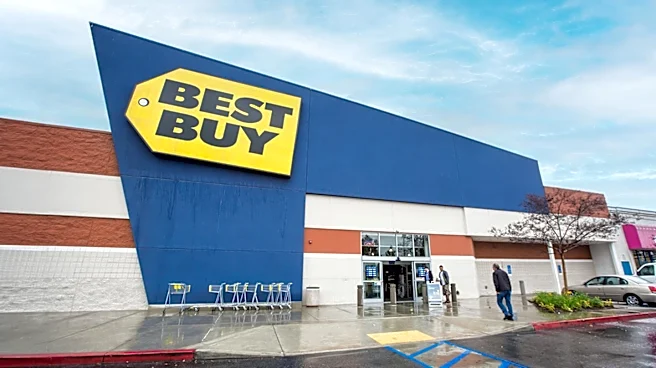
Best Buy has announced that 29 of its supply chain facilities have received Green Business Certification Inc.'s TRUE zero-waste certification. This achievement marks a significant milestone in the retailer's broader sustainability efforts. The company's
Chino, California, supply chain facility was the first to obtain this certification in 2021. Best Buy emphasized that waste reduction is a crucial component of its environmental strategy, aimed at conserving resources and promoting sustainable operations across its business. The certification was attained through a combination of initiatives, including changes in packaging, expanded recycling programs, and other innovative practices. Each facility also has an employee-led 'green team' dedicated to advancing waste-diversion targets and educating colleagues on waste reduction and efficient material use. The company handles massive volumes of electronics, appliances, and accessories, making even small improvements in packaging impactful. Cardboard and plastic constitute the largest share of materials collected and diverted from landfills, with some expanded polystyrene foam being repurposed into solid blocks for new products.
Why It's Important?
This accomplishment is important as it demonstrates a major U.S. retailer's commitment to environmental sustainability within its extensive supply chain. For consumers, it signals that Best Buy is actively working to reduce its environmental footprint, potentially influencing purchasing decisions towards more eco-conscious businesses. For the retail industry, it sets a precedent and highlights the feasibility of implementing large-scale zero-waste initiatives, encouraging other companies to adopt similar practices. The focus on waste reduction, particularly for materials like cardboard, plastic, and polystyrene foam, addresses significant environmental challenges associated with packaging and electronic waste. This move also aligns with Best Buy's broader strategy to achieve net-zero emissions by 2040, indicating a long-term commitment to sustainability that extends beyond waste management to include areas like renewable energy. The involvement of employee-led 'green teams' also underscores the importance of internal engagement in driving corporate sustainability goals.
What's Next?
Best Buy is expected to continue its efforts to integrate sustainability into its business model, building on the success of its zero-waste certifications. The company's stated goal of achieving net-zero emissions by 2040 suggests further investments and initiatives in areas such as renewable energy and energy efficiency across its operations. The expansion of its solar power portfolio, including a recent solar garden at a New York store and additional solar generation near a California distribution center, indicates a continued focus on clean energy adoption. Other retailers and businesses may look to Best Buy's model as a blueprint for their own sustainability programs, potentially leading to a broader industry shift towards more environmentally responsible practices. Best Buy will likely continue to report on its progress in waste diversion and emissions reduction, providing transparency to stakeholders and reinforcing its commitment to environmental stewardship.
Beyond the Headlines
The achievement of TRUE zero-waste certification by Best Buy's supply chain facilities reflects a growing trend among large corporations to embed sustainability into their core business strategies, moving beyond mere compliance to proactive environmental leadership. This shift is driven by increasing consumer demand for eco-friendly products and practices, investor pressure for ESG (Environmental, Social, and Governance) performance, and the recognition of long-term operational efficiencies and cost savings associated with waste reduction. The emphasis on 'green teams' within facilities highlights the cultural and organizational changes necessary to achieve such ambitious goals, demonstrating that sustainability is not just a top-down mandate but also requires grassroots engagement. This development could also spur innovation in packaging materials and recycling technologies as companies seek more effective ways to minimize waste. Ultimately, Best Buy's actions contribute to a broader societal conversation about corporate responsibility and the role of businesses in addressing global environmental challenges.