
What's Happening?
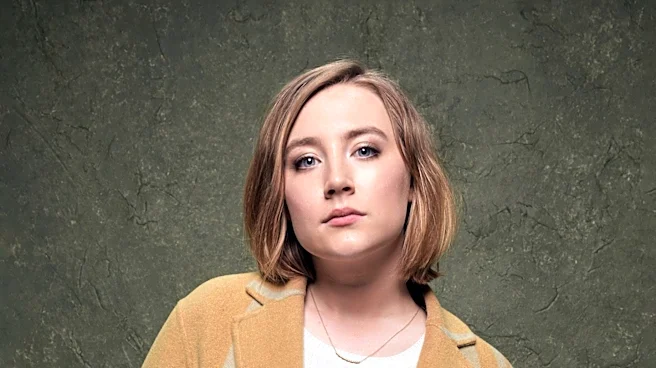
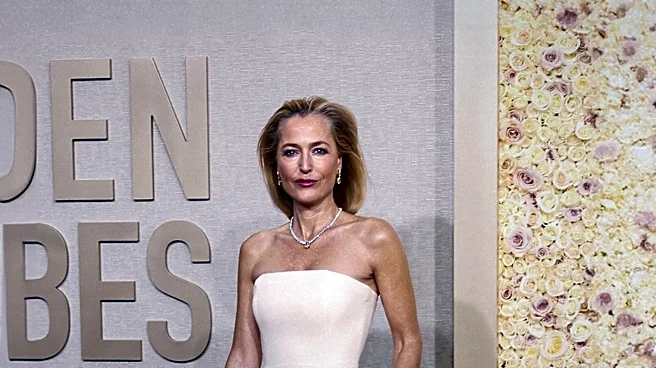
Actress Gillian Anderson has addressed a viral video showing her telling fans not to sit in the front row of her West End production of 'Who's Afraid of Virginia Woolf?'. The video, filmed outside the Sohoplace
Theatre in London, captured Anderson stating, "You guys cannot sit in the front row. It's so distracting. You can't come 20 times and sit in the front row, it'll drive me mad." Following mixed reactions on social media, Anderson clarified on X (formerly Twitter) that the individuals in the video are women she has known for over 20 years. She requested that no negativity be directed towards them, explaining that while she and the cast are thrilled to perform, the intimate venue means they can see the front row, and it can sometimes be distracting. The show, which also stars Billy Crudup, opened on September 21 and is scheduled to run until December 19.
Why It's Important?
This incident highlights the evolving dynamics between public figures and their dedicated fan bases, particularly in live performance settings. For actors, maintaining focus and immersion in a role is crucial, and repeated presence by the same individuals in close proximity can disrupt this. The situation also underscores the double-edged sword of social media, where short, decontextualized clips can quickly go viral, leading to widespread misinterpretation and debate. Anderson's swift clarification demonstrates an attempt to manage her public image and protect her long-standing relationships with fans, while also setting boundaries necessary for her professional performance. It brings to light the challenges celebrities face in balancing accessibility with the demands of their craft, and how easily public perception can be swayed by isolated moments.
What's Next?
The clarification from Gillian Anderson is likely to temper the immediate social media debate surrounding the incident. For theatergoers, it serves as a reminder of the unique environment of live performances, especially in intimate venues, and the potential impact of audience behavior on performers. The discussion may prompt broader conversations within the entertainment industry about audience etiquette and how performers can communicate their needs without alienating fans. Future interactions between celebrities and their fans, particularly in public or semi-public settings, might be approached with increased awareness of how such moments can be perceived and shared online. The show 'Who's Afraid of Virginia Woolf?' will continue its run, with Anderson's statement potentially influencing how front-row attendees approach their viewing experience.
Beyond the Headlines
Beyond the immediate controversy, this event touches upon the broader cultural shift in how celebrity interactions are consumed and judged. The ubiquity of smartphones and social media means that private or semi-private exchanges can instantly become public spectacles, often stripped of their original context. This creates a pressure cooker environment for public figures, where every action is scrutinized. Furthermore, it raises questions about the nature of fandom in the digital age—how much access is too much, and where do the boundaries of personal space and professional conduct lie for both the celebrity and the fan? The incident also subtly underscores the human element of performance, reminding audiences that actors are not merely characters but individuals who require specific conditions to deliver their best work, even when interacting with those who admire them most.