





What's Happening?
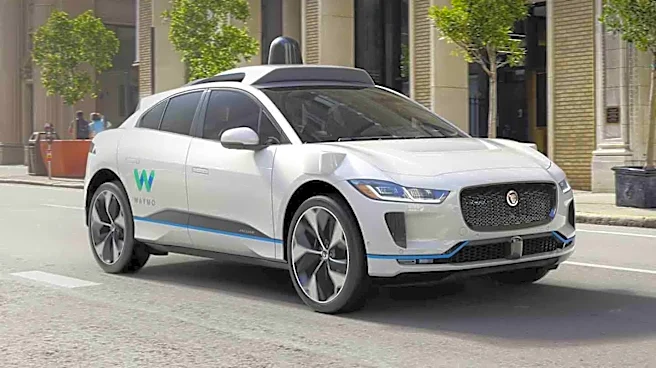
Waymo, Alphabet's self-driving unit, has achieved a milestone of 500,000 fully driverless paid trips per week, doubling its figures in less than a year. Operating in 11 major U.S. cities, Waymo has expanded its market presence significantly in 2026. In
contrast, Tesla's Full Self-Driving (FSD) technology still requires human oversight, with a fully driverless version expected later this year. Waymo's success in the autonomous ride-hailing sector highlights its operational lead over Tesla, as it continues to build a standalone consumer brand. The company recently ended a pilot with Uber in Phoenix, opting to operate independently, which underscores its confidence in capturing market demand.
Why It's Important?
Waymo's progress in autonomous ride-hailing represents a significant shift in the transportation industry, with implications for market competition and consumer adoption of self-driving technology. As Waymo establishes itself as a leader in the sector, it challenges Tesla's dominance and narrative around autonomous vehicles. This development could influence investor perceptions and valuations of companies involved in autonomous technology. Waymo's success also highlights the potential for Alphabet to leverage its technological and financial resources to dominate the future of transportation, impacting the broader market dynamics and competitive landscape.
What's Next?
Waymo is likely to continue expanding its operations and market presence, potentially entering new cities and increasing its fleet size. The company's decision to operate independently in Phoenix suggests a strategic focus on building brand recognition and customer loyalty. As the global robotaxi market is projected to grow significantly, Waymo's early lead positions it to capture a substantial share of this emerging market. Investors and industry stakeholders will be closely watching Waymo's next moves, as well as Tesla's response to this competitive challenge.