









What's Happening?
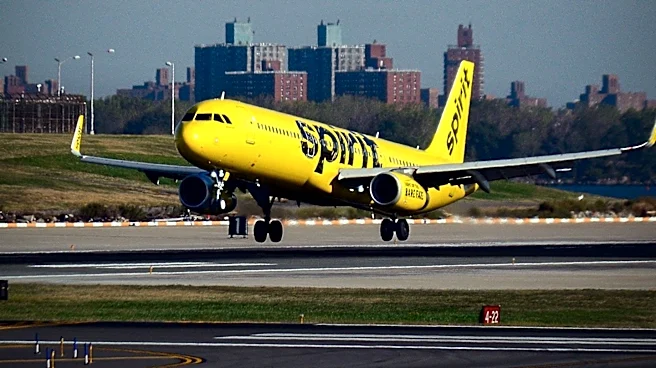
Breeze Airways is significantly expanding its flight network by introducing nonstop services to six new destinations. This expansion includes routes previously operated by Spirit Airlines, which ceased operations earlier in 2026. The move aims to strengthen
Breeze Airways' presence in the United States and enhance connections to the Caribbean. Key beneficiaries of this expansion include Myrtle Beach International Airport in South Carolina, where Breeze is increasing its services, and Arnold Palmer Regional Airport in Latrobe, Pennsylvania, which will see the restoration of commercial airline connections. New routes from Myrtle Beach to Boston are set to begin in May 2027, while flights between Latrobe and Myrtle Beach will start in February 2027, followed by Latrobe-to-Orlando services in May. Additionally, Buffalo, New York, will gain new connections to Raleigh-Durham, Myrtle Beach, and Charleston, South Carolina. Breeze Airways is also bolstering its international network from Tampa International Airport with new Caribbean routes, including Montego Bay, Jamaica; St. Thomas in the U.S. Virgin Islands; and Santo Domingo in the Dominican Republic, with flights to Santo Domingo commencing in June 2027.
Why It's Important?
This expansion by Breeze Airways is crucial for several reasons. First, it addresses the void left by Spirit Airlines' shutdown, which disrupted numerous popular leisure routes, providing much-needed connectivity for travelers. By targeting underserved markets and offering direct flights, Breeze Airways is capitalizing on demand for convenient, point-to-point travel without the need for major airline hub connections. This strategy benefits smaller markets and regional airports that lost commercial services, such as Arnold Palmer Regional Airport. The increased competition and availability of low-cost options could lead to more affordable air travel for consumers in these regions. Furthermore, the expansion into Caribbean destinations from Tampa and Raleigh-Durham caters to both leisure travelers and those visiting family and friends, boosting tourism and economic activity in these areas. The airline's focus on its growing fleet of Airbus A220-300 aircraft supports its strategy of operating efficiently between smaller markets, potentially reshaping regional air travel dynamics.
What's Next?
Breeze Airways is poised to continue its growth trajectory by further integrating into markets previously served by Spirit Airlines and identifying other underserved routes. The airline's strategy of offering affordable, nonstop flights between smaller cities suggests potential for further network expansion, especially as it leverages its Airbus A220-300 fleet. Travelers in the newly added and expanded markets can anticipate increased flight options and potentially more competitive pricing. Other low-cost carriers may also observe Breeze's success in filling the gaps left by Spirit Airlines and consider similar expansion strategies, leading to a more dynamic and competitive landscape in regional air travel. The airline will likely monitor the performance of these new routes to inform future decisions on network development and fleet utilization. The focus on both domestic and international leisure destinations indicates a continued commitment to capturing the vacation travel market.
Beyond the Headlines
The strategic expansion by Breeze Airways highlights a broader trend in the U.S. airline industry: the increasing importance of point-to-point travel and the viability of serving smaller markets directly. This approach challenges the traditional hub-and-spoke model dominated by larger carriers. The shutdown of Spirit Airlines, a significant low-cost carrier, created a unique opportunity for agile airlines like Breeze to quickly adapt and fill market gaps, demonstrating the fluid nature of the airline industry. This shift could lead to a more decentralized air travel network, offering greater convenience for passengers outside major metropolitan areas. It also underscores the economic impact of airline services on regional economies, as the restoration of flights to airports like Arnold Palmer Regional Airport can significantly boost local tourism and business. The success of Breeze Airways in these new markets could serve as a blueprint for other emerging airlines looking to carve out a niche in a competitive industry.