

What's Happening?
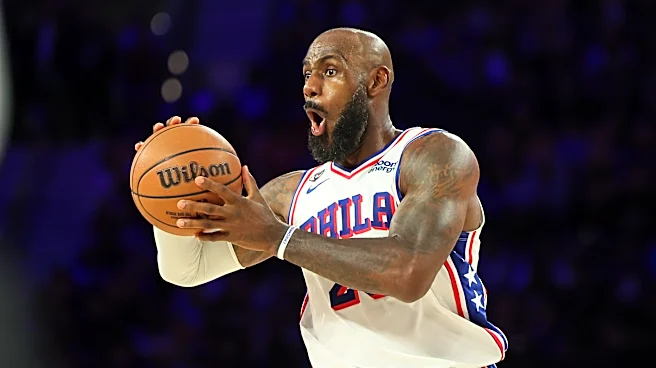
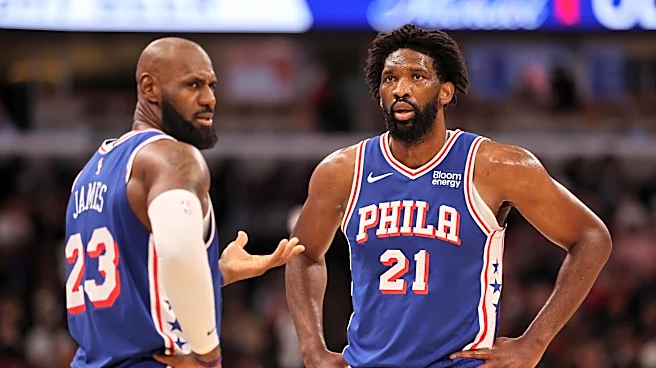
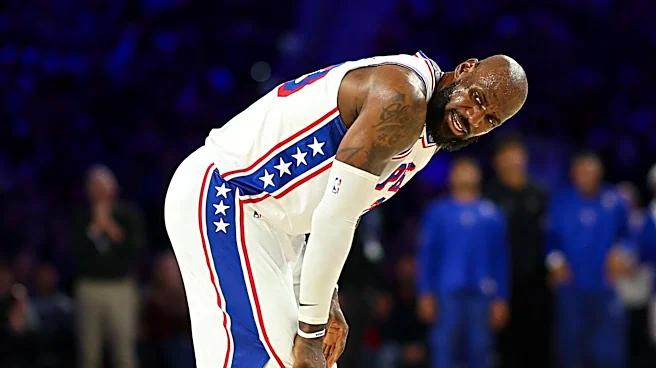
Chad Johnson, speaking on the Nightcap podcast, has asserted that LeBron James' current Philadelphia 76ers team is the most talented he has ever played with. James recently moved to Philadelphia from the Los Angeles Lakers, and the 76ers have started
the season with a 13-3 record. Johnson suggests that the abundance of talent on the 76ers, including players like Tyrese Maxey (averaging 26.5 points) and Jaylen Brown, allows James to reduce his playing minutes and not bear the entire burden of carrying the team. He noted that James is averaging 32.5 minutes per game this season, a decrease from his 33.2 minutes in 2025/26 and 34.9 minutes in 2024/25. Johnson believes this level of supporting talent is unprecedented in James' career, making his role easier.
Why It's Important?
This claim by Chad Johnson is significant as it directly impacts the narrative surrounding LeBron James' career and the Philadelphia 76ers' prospects. If true, it suggests that James is now in a position where he can conserve energy and potentially extend his career, relying more on a strong supporting cast. This could lead to a more sustainable path to championship contention for the 76ers, as James' individual performance would not need to be as dominant as in previous years. For the NBA, it highlights the strategic importance of team construction around superstar players, especially as they age. The comparison to James' previous teams, including the championship-winning Lakers squad of 2020, sparks debate among fans and analysts about the true strength of the 76ers and their potential to succeed in the current season. The performance of the 76ers under this new dynamic will be closely watched, influencing future team-building strategies across the league.
What's Next?
The Philadelphia 76ers will continue their 2026/27 NBA season, with all eyes on how LeBron James integrates with and leverages the talent of his teammates. The team's performance throughout the season, particularly in crucial games and the playoffs, will serve as the ultimate test of Chad Johnson's claim. Analysts and fans will closely monitor James's minutes, his statistical output, and the overall team chemistry and success. If the 76ers achieve significant success, it will validate Johnson's assessment and potentially redefine expectations for how veteran superstars can contribute to championship-caliber teams. Conversely, if the team underperforms, it could lead to questions about the true depth of talent or the effectiveness of the team's strategy. The ongoing debate will likely fuel discussions about team dynamics and player roles in modern basketball.
Beyond the Headlines
Beyond the immediate implications for the 76ers' season, Johnson's statement touches on a broader theme in professional sports: the evolution of a superstar's role. As athletes like LeBron James age, their physical capabilities naturally decline, necessitating a shift from being the sole dominant force to a more facilitative leader. This transition requires a team structure that can absorb some of the scoring and playmaking responsibilities. The success of this model in Philadelphia could influence how other teams manage their aging superstars, emphasizing the importance of a balanced roster over a single-player-centric approach. It also highlights the psychological aspect of team sports, where a superstar's willingness to cede some control can foster a more cohesive and ultimately more successful unit. This narrative extends beyond basketball, offering insights into leadership and team dynamics in various high-performance environments.