




What's Happening?
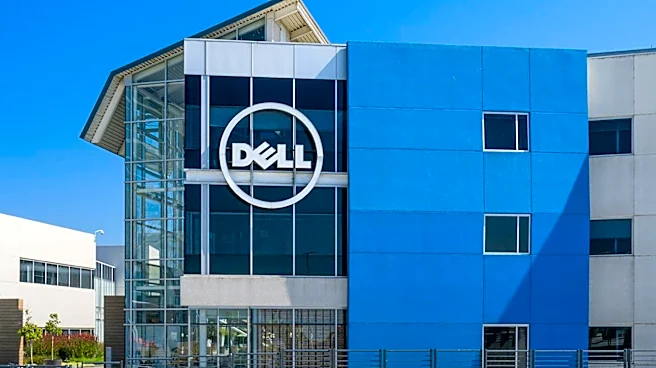
Michael Dell, founder and CEO of Dell Technologies, has underscored the indispensable role of channel partners in the ongoing artificial intelligence (AI) transformation. In a recent interview, Dell stated that AI represents the most significant technological
shift of our lifetime and that partners are essential for its realization. He highlighted that AI projects are moving from experimental phases to production environments, where Dell builds the infrastructure, and partners contribute their expertise, relationships, and services to translate AI into tangible business outcomes. Dell Technologies has seen its channel revenue double in its second fiscal quarter, with 69% of new sales and reactivated operations conducted through partners. Historically, approximately half of Dell's revenue originates from this partner ecosystem. Dell emphasized that the relationship with partners extends beyond a mere commercial model, focusing on collaborative business building and frequent communication to understand their needs and support business opportunities.
Why It's Important?
This emphasis on channel partners by a major technology leader like Michael Dell signals a critical shift in how AI solutions are expected to be deployed and scaled across industries. For U.S. businesses, particularly small and medium-sized enterprises, this means increased access to specialized AI implementation and integration services through trusted local partners. The strategy highlights that while core AI infrastructure is vital, its practical application and value extraction depend heavily on the nuanced understanding and tailored solutions that channel partners can provide. This approach could accelerate AI adoption, drive innovation, and create new revenue streams for IT service providers and integrators. Conversely, partners who fail to adapt their business models and skill sets to the demands of 'agentic AI' risk obsolescence, as Dell warned that those doing the same work as five years ago will be left behind. This underscores a need for continuous evolution within the partner ecosystem to remain relevant in the rapidly changing AI landscape.
What's Next?
Looking ahead, Dell Technologies plans to continue its deep engagement with channel partners, fostering collaboration to drive AI adoption. The company's initiatives, such as Dell AI Factory, which has attracted 3,300 new customers in the last three quarters, indicate a sustained focus on providing comprehensive AI solutions. Partners are expected to evolve their commercial models, knowledge bases, and internal processes to meet the demands of agentic AI, moving beyond simply selling hardware to helping businesses deploy and extract value from AI technology. Dell's commitment to modernizing internal processes through initiatives like One Dell Way, which uses AI and automation to streamline partner interactions, suggests ongoing efforts to enhance the partner experience. This strategic alignment aims to ensure that as AI matures, the channel remains a pivotal force in its widespread implementation, requiring partners to continuously innovate and adapt to new market demands.
Beyond the Headlines
The deeper implication of Michael Dell's stance is the recognition that technological advancement, particularly in complex fields like AI, cannot thrive in isolation. It highlights the human element and specialized expertise required to bridge the gap between raw infrastructure and practical business value. This perspective challenges the notion that AI deployment is solely a top-down, vendor-driven process, instead emphasizing a collaborative ecosystem where diverse skills and local market understanding are paramount. Ethically, this approach could foster more responsible AI deployment by ensuring solutions are tailored to specific organizational needs and contexts, rather than being generic. Legally, it might necessitate new contractual frameworks between vendors and partners to define responsibilities and intellectual property in AI solution co-creation. Culturally, it reinforces the idea that successful technological transformation is a partnership, requiring continuous learning and adaptation from all stakeholders, from global tech giants to local integrators, to navigate the complexities and opportunities presented by AI.