



What's Happening?
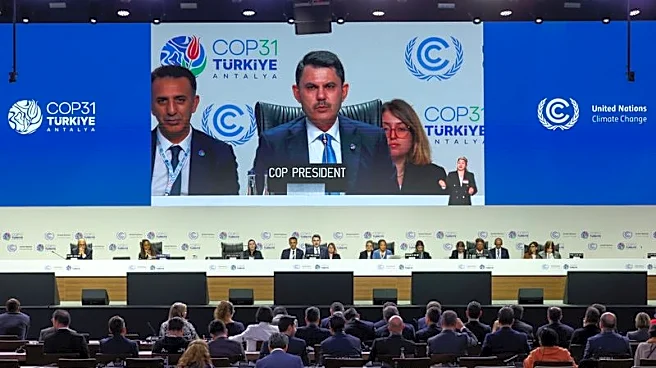
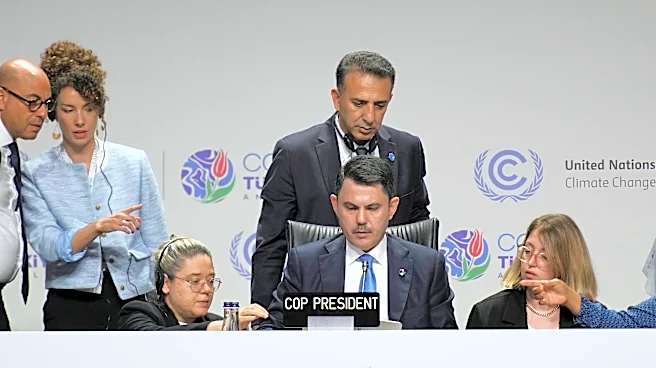
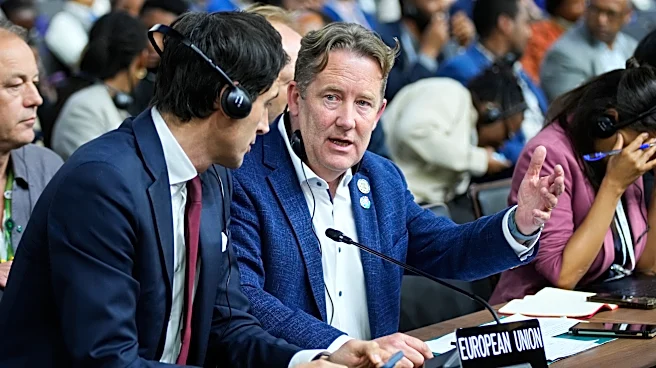
At COP 31, World Bank Group President Ajay Banga participated in discussions focused on mobilizing private capital to address climate and development goals. The summit, co-hosted by organizations including the Glasgow Financial Alliance for Net Zero (GFANZ)
and Bloomberg Philanthropies, brought together leaders from government, finance, and industry. The central theme was how to translate climate ambitions into tangible investments, job creation, and stronger economies. Banga emphasized the significant jobs challenge in emerging economies and advocated for a country-driven development model. This model integrates public finance, private investment, technology, and robust institutions, while also embedding resilience into development strategies from the outset. The discussions highlighted the necessity of scaling private capital mobilization, especially given constraints on public resources. Speakers shared how World Bank Group instruments like guarantees, blended finance, and risk-sharing mechanisms are aiding countries and financial institutions in improving financing terms, managing risks, and expanding investment opportunities.
Why It's Important?
The discussions led by World Bank Group President Ajay Banga at COP 31 are crucial for the global economy and particularly for emerging markets. The emphasis on mobilizing private capital underscores a recognition that public funds alone are insufficient to meet the vast financial requirements for climate action and sustainable development. By promoting a country-driven development model, Banga is advocating for tailored solutions that consider the unique contexts and needs of individual nations, potentially leading to more effective and sustainable outcomes. The focus on guarantees, blended finance, and risk-sharing instruments is vital for de-risking investments in emerging economies, which can attract more private sector participation. This approach could unlock significant capital for critical sectors such as renewable energy, agriculture, and infrastructure, fostering economic growth, creating jobs, and building resilience against climate shocks. The success of these initiatives could determine the pace and scale of global efforts to combat climate change and achieve sustainable development goals.
What's Next?
The World Bank Group, under President Ajay Banga's leadership, is expected to continue its efforts to scale up private capital mobilization. The organization has already significantly increased private capital mobilization, from $35 billion in FY22 to $112 billion in the current fiscal year, but acknowledges that substantial gaps persist, particularly in low-income countries. Future actions will likely involve further development and deployment of financial instruments such as guarantees and blended finance to attract more institutional capital into emerging markets. There will be a continued push for stronger pipelines of bankable projects, clearer regulatory frameworks, and the establishment of country platforms to facilitate investment. The focus will also remain on expanding financing for critical areas including clean energy, industrial decarbonization, climate adaptation, water management, agriculture, and resilient infrastructure. These efforts aim to translate the discussions at COP 31 into concrete investment opportunities and partnerships.
Beyond the Headlines
The emphasis on mobilizing private capital for climate and development, as highlighted by World Bank Group President Ajay Banga, signals a fundamental shift in global development finance. This approach moves beyond traditional aid models towards a more integrated strategy that leverages the vast resources of the private sector. The ethical implications of this shift include ensuring that private investments align with genuine development needs and do not exacerbate inequalities or environmental harm. Legally, it necessitates the creation of robust regulatory frameworks in emerging economies to protect investments while upholding social and environmental standards. Culturally, it requires fostering a collaborative environment between governments, international organizations, and private entities, often bridging different operational philosophies. The long-term shift could lead to a more resilient global economy, less reliant on public debt, and more capable of addressing complex challenges like climate change through innovative financial mechanisms and partnerships.