




What's Happening?
Billionaire Carl Icahn has allocated 86% of his reported $9.4 billion U.S. stock portfolio into just two energy-linked companies: Icahn Enterprises (IEP) and CVR Energy (CVR). As of September 30, IEP constituted 47.18% of his portfolio, valued at approximately
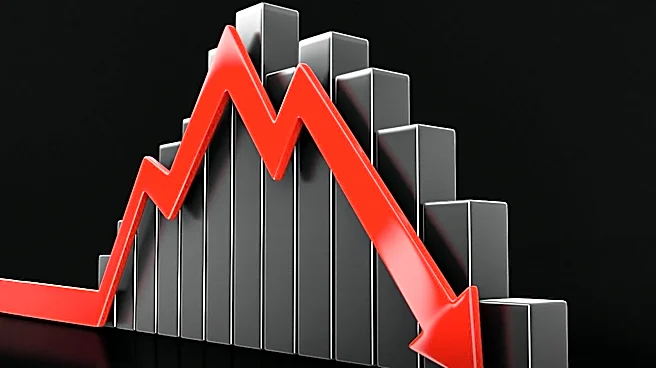
$4.45 billion, while CVR Energy made up 38.51%, or about $3.63 billion. Icahn chairs IEP, which in turn owns most of CVR. However, both stocks have experienced substantial drops since October 20. IEP fell by about 56% between October 20 and November 20, and CVR Energy slid by 45.77% in the same period. Bloomberg estimates Icahn's fortune at approximately $1.3 billion, marking a $21 billion decrease over five years. Additionally, Icahn Enterprises' investment funds recorded a 43.8% loss in the first nine months of 2026, partly due to $522 million in third-quarter losses from refining hedges intended to offset the CVR stake.
Why It's Important?
This significant concentration in two underperforming energy stocks highlights the substantial risks associated with highly concentrated investment strategies, even for experienced investors like Carl Icahn. The dramatic decline in the value of IEP and CVR Energy has directly impacted Icahn's personal wealth, with his fortune plummeting by an estimated $21 billion in five years. The financial health of Icahn Enterprises is also critical, as it faces challenges in refinancing $1.4 billion in bonds due in May, with current yields on these bonds exceeding 14%. This situation could have broader implications for the energy sector and the financial markets, particularly if IEP struggles to meet its debt obligations, potentially affecting investor confidence in similar holding companies or highly leveraged entities. The decline also underscores the volatility inherent in the energy market and the potential for rapid wealth erosion when investments are not diversified.
What's Next?
Icahn Enterprises faces an immediate challenge in refinancing approximately $1.4 billion of bonds due in May, with the company's third-quarter report indicating uncertainty about securing acceptable terms. The current high yield of over 14% on these bonds, up from 6% three months prior, suggests increased market concern about IEP's financial stability. Additionally, some 2029 bonds are yielding above 30%. Bloomberg notes that CVR, which represents about half of IEP's value, could potentially be sold to fund repayments. The performance of IEP and CVR Energy stocks will continue to be closely watched, as further declines could exacerbate refinancing difficulties and further impact Icahn's personal loan collateral, which is tied to his IEP units. The market will also be observing any strategic moves by Icahn to address the portfolio concentration and debt obligations.
Beyond the Headlines
The situation with Carl Icahn's portfolio extends beyond immediate financial losses, touching upon the broader implications of activist investing and corporate governance. Icahn's strategy of taking significant stakes in companies and pushing for changes has historically yielded substantial returns, but this current downturn illustrates the inherent risks of such high-conviction, concentrated bets. The reliance on a few key assets, particularly in a volatile sector like energy, exposes investors to considerable market fluctuations. This event could prompt a re-evaluation of risk management practices within large investment funds and highlight the importance of diversification, even for seasoned billionaires. Furthermore, the challenges faced by Icahn Enterprises in refinancing its debt could serve as a case study for the potential vulnerabilities of holding companies with significant leverage, especially during periods of market stress or sector-specific downturns.