







What's Happening?
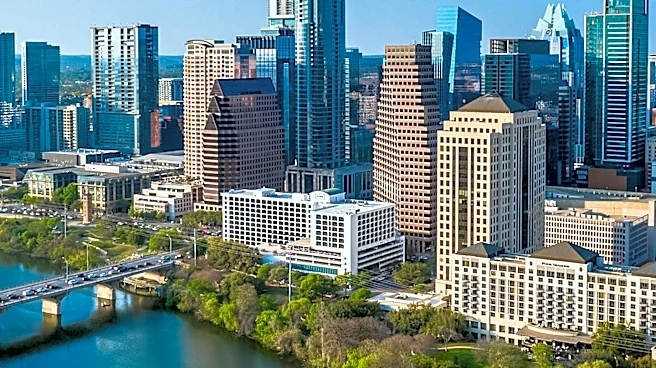
Renting a home in Austin, Texas, offers a substantial monthly saving of $1,917 compared to buying, according to a recent Realtor.com rental report. This makes Austin the top major metropolitan area in the U.S. for rental savings, with the median asking
rent at $1,378 and the median buying cost at $3,295. This trend is not isolated to Austin; the report indicates that renting a zero-to-two bedroom starter home is more affordable than buying in all 50 of the nation's largest metros. Other major cities like Los Angeles/Long Beach/Anaheim and Seattle also show significant monthly savings for renters, at $2,049 and $1,961 respectively, although their overall savings percentages are lower due to higher baseline costs. The increasing gap between renting and buying costs is attributed to rising mortgage rates and housing prices, which are causing homebuyers to take an average of 15 years to break even compared to renting.
Why It's Important?
This shift towards renting over buying has significant implications for the U.S. housing market and personal finance. For individuals, particularly younger generations, renting is becoming a more financially viable option, allowing them to build savings rather than committing to long-term, high-cost mortgages. This trend could lead to a re-evaluation of traditional homeownership as the primary path to wealth accumulation. For the real estate industry, it suggests a sustained demand for rental properties, potentially influencing development strategies and investment in multi-family housing. Landlords in renter-friendly markets are also becoming more open to offering concessions, such as free rent periods or waived fees, giving renters increased leverage. This dynamic could lead to more competitive rental markets in some areas, while in others, an oversupply of housing, as seen in Texas and Nashville, contributes to lower rents.
What's Next?
The current market conditions suggest that the trend of renting being more financially advantageous than buying is likely to continue in the near future, especially if mortgage rates and housing prices remain elevated. Renters can expect to maintain leverage in negotiations with landlords, potentially leading to more favorable lease terms and concessions. For those considering housing options, experts advise balancing financial decisions with lifestyle choices, suggesting that renting can be a smarter initial step than buying a starter home, allowing for savings towards a 'forever home' later. The sustained demand for rentals may also encourage further development in the rental sector, potentially leading to more diverse housing options and continued competition among landlords to attract tenants.
Beyond the Headlines
The growing preference for renting over buying could have broader societal and economic impacts. It challenges the long-held American dream of homeownership as a cornerstone of financial stability and personal success. This shift might lead to a more mobile workforce, as renting offers greater flexibility for relocation. It could also influence urban planning and infrastructure development, with a greater focus on amenities and services catering to a predominantly renter population. Furthermore, the increased financial flexibility for renters could stimulate other sectors of the economy, as individuals have more disposable income for consumption and investment. However, it also raises questions about long-term wealth building for those who forgo homeownership, potentially exacerbating wealth inequality if alternative investment avenues are not equally accessible or understood.