

What's Happening?
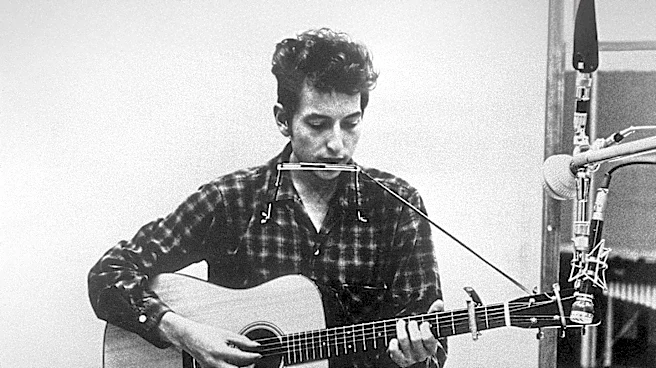
Bob Dylan's albums from the 1960s are noted for their somber portrayal of America, capturing a sense of loss and dispossession during a period of significant social change. His early work, such as 'The Times They Are A-Changin'' (1964), addressed themes
of rural poverty, social injustice, and racism, establishing him as a voice of his generation, a label he often resisted. By the mid-60s, Dylan transitioned to electric music, releasing influential albums like 'Highway 61 Revisited' (1965) and 'Blonde On Blonde' (1966), which explored complex lyrical themes and pushed musical boundaries. His 1967 album, 'John Wesley Harding,' presented a vision of America as a 'ghost world,' populated by lost figures, offering a stark contrast to the prevailing 'Summer of Love' euphoria. This album, with its minimalist musical arrangement, served as a grim anticipation of a turbulent era marked by riots, war, and assassinations, reflecting a ruined 1960s dream.
Why It's Important?
Dylan's musical evolution and lyrical content during the 1960s are significant for their reflection of and influence on American culture and counterculture. His willingness to challenge musical norms, moving from folk to electric, alienated some traditional fans but captivated a wider audience, demonstrating an artist's right to evolve beyond expectations. The themes of disillusionment, social critique, and existential searching in his music resonated deeply with a generation grappling with profound societal shifts, including the Civil Rights Movement, the Vietnam War, and evolving social norms. His work provided a soundtrack and a poetic commentary on the era's anxieties and aspirations, shaping the artistic and intellectual landscape. The enduring relevance of his albums highlights their power as historical documents that capture the mood and complexities of a pivotal decade in American history, influencing subsequent generations of musicians and writers.
What's Next?
While Bob Dylan's 1960s output is a closed chapter, its influence continues to be re-evaluated and celebrated. Future analyses may delve deeper into how these albums continue to speak to contemporary social and political issues, given their timeless themes of injustice, change, and the human condition. Scholars and critics will likely continue to explore the intricate connections between Dylan's personal artistic journey and the broader American narrative of the time. The ongoing re-release of archival material, such as 'The Bootleg Series,' ensures that new generations can discover and interpret his work, potentially leading to fresh perspectives on his impact. His legacy as a Nobel laureate in Literature also encourages continued academic study of his lyrical craftsmanship and its place within American literary tradition, ensuring his 1960s albums remain a subject of ongoing cultural discourse and appreciation.
Beyond the Headlines
Beyond their immediate musical impact, Dylan's 1960s albums represent a profound cultural shift in how popular music could engage with serious social and philosophical themes. His work blurred the lines between music, poetry, and social commentary, elevating the lyrical content of popular songs to an art form capable of profound intellectual and emotional depth. This period marked a departure from more simplistic pop narratives, paving the way for artists to use their platforms for deeper introspection and critique. The 'lost America' depicted in his songs speaks to a recurring American anxiety about national identity, progress, and disillusionment, themes that remain relevant in contemporary discourse. His artistic courage in defying genre expectations and audience demands also set a precedent for artistic independence, influencing countless musicians to prioritize their creative vision over commercial pressures or established norms, thereby enriching the broader cultural landscape.