





What's Happening?
The Pittsburgh Penguins are facing ongoing issues with their ability to close out games, a problem highlighted by their recent overtime loss to Utah. Despite a goal from Ben Kindel with 20 seconds left that should have secured a regulation win, the Penguins conceded
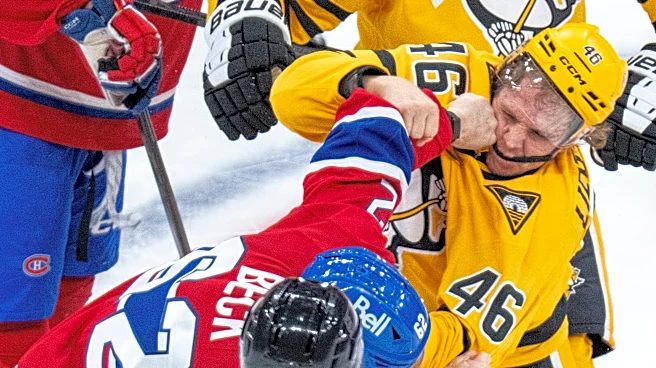
a tying goal and subsequently lost in overtime. This marks the third instance this season where the team has allowed an opponent to tie the game in the final minute, with previous occurrences against the Dallas Stars and Montreal Canadiens. While they managed to win the first two in overtime or shootout, the recent loss to Utah underscores a persistent pattern. The coaching staff's deployment decisions, particularly placing the fourth line on the ice during critical moments, are drawing scrutiny, especially after a defensive pairing of Declan Carlile and Kaedan Korczak made several errors leading to the tying goal against Utah.
Why It's Important?
The Penguins' recurring inability to secure regulation wins and close out games has significant implications for their standing in the league. With only two regulation wins in 13 games, they are in undesirable company with teams like San Jose, Columbus, Los Angeles, and Vancouver, who also lack consistent regulation victories. This trend suggests a fundamental flaw in their game management or strategic execution during high-pressure situations. For a team with high expectations, these lost points can be crucial in a competitive season, potentially affecting their playoff chances. The scrutiny on the coaching staff, particularly regarding player deployment in critical moments, indicates a potential need for tactical adjustments or personnel changes to address these systemic issues. The performance of key players, including Sidney Crosby, who is experiencing a slow start to the season, further compounds the team's challenges.
What's Next?
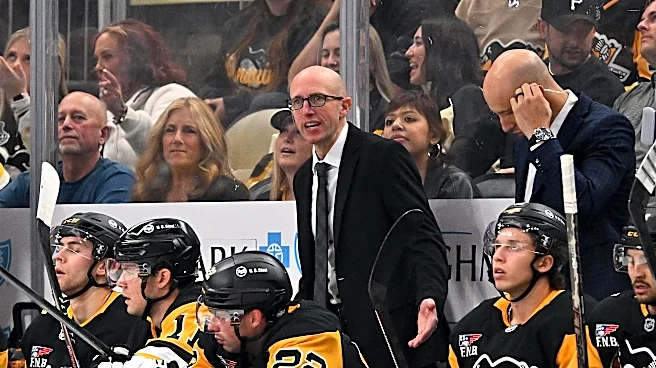
The Penguins will need to address their late-game performance and defensive strategies to prevent further losses from similar scenarios. The coaching staff, led by Dan Muse, will likely face increased pressure to implement changes in player deployment and game management, especially in the final minutes of regulation. There may be adjustments to the lineup, potentially involving players like Andrei Kuzmenko or Declan Carlile, who have been underperforming or making critical errors. The team's upcoming schedule, including back-to-back games, will test their ability to adapt and find a more consistent winning formula. The development and utilization of their young goaltenders, Arturs Silovs and Sergei Murashov, will also be a key factor in their future performance, as the team seeks to balance their development with immediate competitive needs.
Beyond the Headlines
The Penguins' struggles with closing out games extend beyond mere tactical errors; they point to a potential psychological or systemic issue within the team. The repeated nature of these late-game collapses could erode player confidence and create a culture of anxiety in critical moments. This pattern might also reflect deeper issues in team leadership or communication, where players are not executing the game plan effectively under pressure. The impact on player development, particularly for younger players like Carlile, who are making crucial mistakes, could be significant. The team's long-term competitiveness hinges on resolving these issues, as consistent failure to secure points in winnable games can have lasting consequences on team morale, fan engagement, and ultimately, the franchise's ability to attract and retain top talent.