


What's Happening?
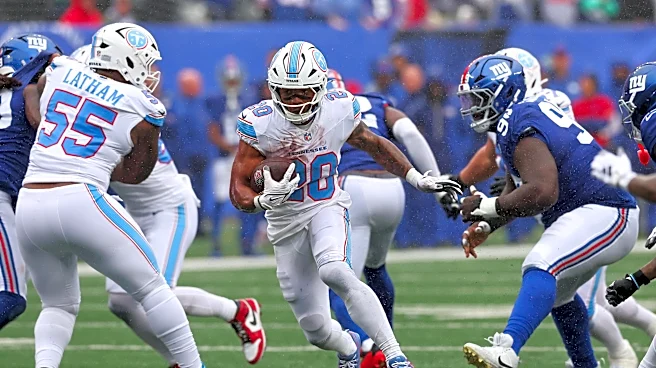
Calvin Ridley, wide receiver for the Tennessee Titans, is being considered by NFL teams as a backup option for trade as the deadline approaches. Ridley, who signed a four-year, $92 million contract with the Titans, has not met expectations, recording
only six receptions this season. This underperformance has led to him falling down the team's depth chart, which is now populated with younger talent. Despite his diminished role, teams are reportedly eyeing Ridley as a contingency if they fail to acquire higher-profile receiver targets like Brian Thomas Jr. or Josh Downs. The Titans are reportedly seeking a fifth-round pick for the ninth-year pass catcher, a valuation that some consider optimistic given Ridley's current production and age, as he approaches his 32nd birthday. However, Ridley does have a history of three 1,000-yard receiving seasons, two of which occurred in the previous three seasons (2023, 2024).
Why It's Important?
This situation highlights the volatile nature of player valuations and contract expectations in the NFL. For the Titans, moving Ridley could free up significant cap space and allow them to further commit to developing their younger receiving corps, aligning with a potential rebuilding strategy. For other NFL teams, Ridley represents a potentially cost-effective acquisition for receiver-needy contenders, especially if primary targets become unavailable or too expensive. His past performance indicates he still possesses the talent to contribute, making him an attractive 'plan B' for teams looking to bolster their offensive firepower without overspending. The trade market for wide receivers is dynamic, and Ridley's availability could influence the asking prices and trade decisions for other players in similar positions, impacting team rosters and competitive balances across the league.
What's Next?
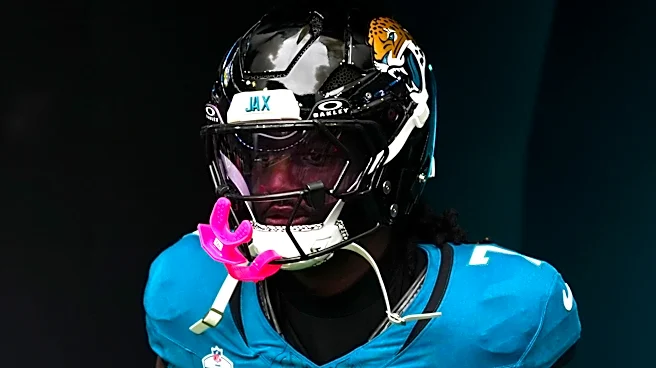
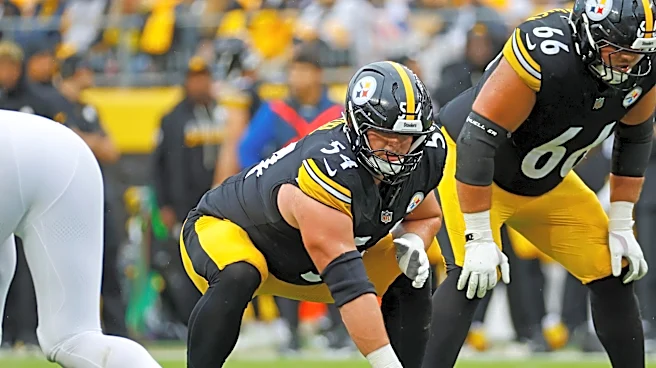
As the trade deadline approaches, the Titans will likely continue to gauge interest in Ridley. The outcome of negotiations for other prominent wide receivers, such as Brian Thomas Jr. and Josh Downs, will directly influence Ridley's market. If teams like the Chiefs, Steelers, or Commanders miss out on their primary targets, interest in Ridley could intensify. The Titans' asking price of a fifth-round pick may be subject to negotiation, especially if Ridley's role remains limited. Should a trade occur, Ridley would move to a new team with approximately $2.58 million remaining on his 2026 salary. His performance on a new team would be closely watched, as it could either revitalize his career or confirm concerns about his declining production. The Titans' decision will also reflect their commitment to developing their current roster versus recouping assets for a player not central to their future plans.
Beyond the Headlines
The situation with Calvin Ridley extends beyond a simple trade scenario, touching upon broader themes of player longevity, contract value, and team strategy in professional sports. Ridley's significant contract, followed by a rapid decline in production, underscores the inherent risks in large player investments. It also highlights the constant pressure on veteran players to maintain elite performance in a league that increasingly values youth and cost-controlled talent. For the Titans, this move could signal a strategic shift towards a full-scale rebuild, prioritizing future assets over current veteran contracts. For Ridley, a trade could offer a fresh start and a chance to prove his value in a new offensive scheme, potentially altering perceptions of his career trajectory. This scenario also reflects the intricate dance between player agents, team management, and market dynamics that shape NFL rosters.