



What's Happening?
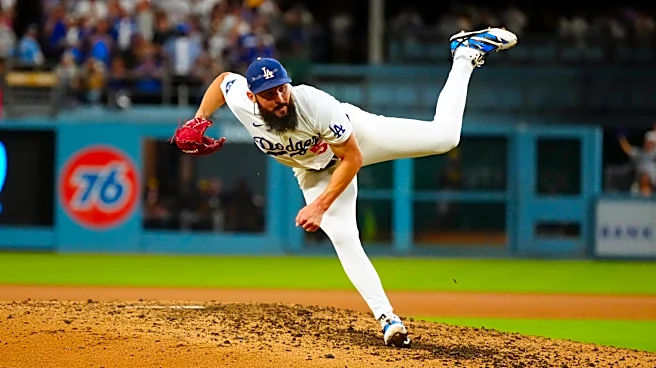
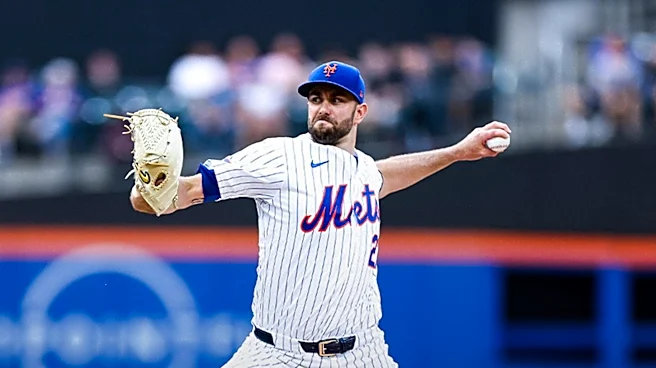
The New York Mets have reportedly acquired reliever Vesia, adding another arm to their bullpen. This move signifies the Mets' continued efforts to bolster their roster. However, the acquisition has prompted discussion regarding the financial commitment
involved, with some observers questioning the decision to spend over $10 million per year for a middle reliever. Vesia is described as a 'rubber-armed guy,' suggesting durability and frequent availability, which could be a valuable asset for a bullpen. The transaction reflects the ongoing trend in Major League Baseball where teams are increasingly investing significant resources into relief pitching, recognizing its critical role in late-game situations and overall team success. The specific terms of the deal, beyond the reported annual salary, were not detailed in the immediate announcement.
Why It's Important?
This acquisition is important for several reasons. For the New York Mets, it represents a strategic investment in their bullpen, an area often crucial for contending teams. A strong bullpen can secure wins and alleviate pressure on starting pitchers. However, the reported cost of over $10 million per year for a middle reliever highlights the escalating market value for specialized pitching roles in MLB. This trend impacts team payrolls and resource allocation, potentially limiting spending in other areas. For the broader league, it signals a continued inflation in player salaries, particularly for relievers who can consistently perform under pressure. This could influence how other teams value and pursue bullpen arms in future transactions, potentially driving up costs across the league. The move also reflects the Mets' ambition to compete at a high level, demonstrating a willingness to spend to fill perceived roster needs.
What's Next?
Following the acquisition of Vesia, the New York Mets will integrate him into their bullpen, where he is expected to play a key role in middle relief situations. The team will likely assess his performance during spring training and early in the season to determine his optimal usage. Other teams in the league will observe how this high-value investment in a middle reliever impacts the Mets' overall performance and financial flexibility. This move could also influence future player negotiations, as agents and players may use such contracts as benchmarks for their own salary demands. The Mets' ongoing roster construction will continue to be a focus, as they aim to build a competitive team for the upcoming season, with further moves potentially targeting other areas of need or depth.
Beyond the Headlines
The Mets' acquisition of Vesia, particularly at the reported price point, underscores a significant shift in baseball's valuation of relief pitching. Historically, starting pitchers and star position players commanded the highest salaries, but the increasing specialization and importance of bullpen roles have driven up their market value. This trend reflects a deeper analytical understanding of how games are won, with late-inning relief often being the difference-maker. Ethically, the debate over spending large sums on middle relievers versus other positions raises questions about resource allocation and team building philosophies. Legally, these contracts are standard, but the economic implications for smaller market teams trying to compete with high-spending franchises are considerable. Culturally, it signifies a move away from the traditional emphasis on complete games by starters towards a more segmented, bullpen-heavy approach to pitching, fundamentally altering game strategy and player development.