






What's Happening?
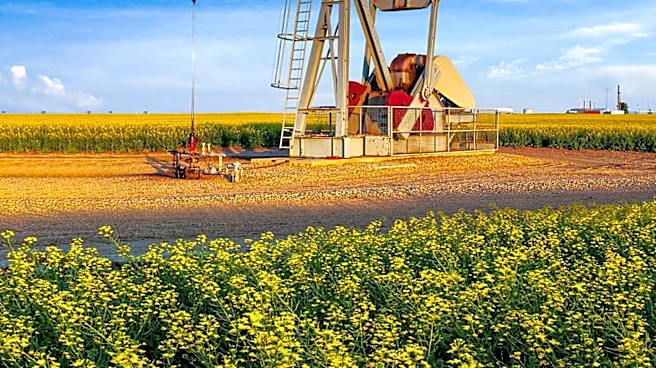
The article explores the intricate relationship between government support and three critical U.S. industries: agriculture, oil and gas, and pharmaceuticals. Each sector receives different forms of government assistance, often labeled as subsidies, but
the nature of this support varies significantly. Agriculture benefits from direct financial mechanisms like federal crop insurance and conservation programs. Oil and gas receive tax provisions that critics often mislabel as subsidies, while also generating substantial government revenue through taxes and fees. Pharmaceuticals benefit from government-funded research, large-scale purchasing through federal programs, and intellectual property protections. These distinctions highlight the complexity of government-industry interactions and the strategic importance of these sectors.
Why It's Important?
Understanding the nuances of government support for these industries is crucial for informed policy discussions. Agriculture, oil and gas, and pharmaceuticals are foundational to national security, providing food, energy, and health. The support they receive ensures stability and resilience in these critical areas. Mischaracterizing these supports as simple subsidies can lead to misguided policy decisions. Recognizing the strategic role of these industries helps justify the need for government involvement, which is essential for maintaining domestic production capabilities and reducing dependency on foreign sources. This understanding is vital for shaping future policies that balance support with economic efficiency.
Beyond the Headlines
The article emphasizes the co-dependence of these industries, illustrating how agriculture relies on energy for production, while pharmaceuticals depend on both agriculture and energy for manufacturing and distribution. This interconnectedness underscores the importance of a holistic approach to policy-making that considers the broader implications of support and regulation. The debate over subsidies often overlooks these complexities, focusing instead on simplistic narratives that fail to capture the strategic necessity of government involvement. By reframing the discussion around strategic infrastructure rather than corporate welfare, policymakers can better address the challenges and opportunities facing these sectors.