
What's Happening?
Nutritionists are actively working to reframe public perception of potatoes, asserting their health benefits and debunking common misconceptions. According to Toby Smithson, a registered dietitian nutritionist
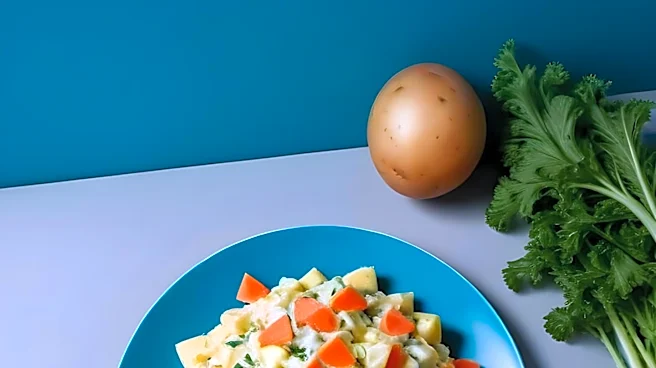
and senior manager of Nutrition and Wellness at the American Diabetes Association, potatoes are a rich source of vitamin C, vitamin B6, potassium, and fiber, especially when consumed with the skin. Barbara Ruhs, a registered dietitian, further emphasizes that potatoes are a 'potassium superstar' and a good quality carbohydrate that also offers plant protein. The debate around potatoes often centers on their carbohydrate content and glycemic index (GI). While a plain baked Russet potato has a high GI, nutritionists explain that the way potatoes are cooked and what they are eaten with significantly impact their effect on blood sugar. For instance, cooling cooked potatoes increases resistant starch, which blunts the glycemic effect, and adding fats or acids, as in potato salad, can lower the GI considerably. Even for diabetics, potatoes can be part of a healthy eating pattern when managed appropriately.
Why It's Important?
The re-evaluation of potatoes by nutritionists is crucial for public health, as it challenges long-held dietary myths that have led to decreased consumption of fresh potatoes in the U.S. The shift from fresh to frozen potato products, often consumed as less healthy options like French fries, indicates a need for better nutritional education. By highlighting potatoes' nutrient density—including vitamins, minerals, and fiber—nutritionists are promoting a more balanced view of carbohydrates and whole foods. This initiative can empower individuals to make informed dietary choices, moving away from restrictive diets that demonize entire food groups. For the agricultural sector, particularly potato farmers, this positive messaging can help revitalize demand for fresh produce. Furthermore, clarifying the role of cooking methods and meal composition in managing glycemic response provides practical guidance for individuals, including those with diabetes, to incorporate potatoes into a healthy diet without fear.
What's Next?
Expect continued efforts from nutrition and health organizations to educate the public on the benefits of potatoes and other often-misunderstood foods. This may involve public awareness campaigns, updated dietary guidelines, and increased collaboration with culinary professionals to promote healthy preparation methods. The food industry might respond by developing new potato-based products that emphasize their nutritional value and offer healthier alternatives to highly processed options. Research into resistant starch and its health implications will likely continue, providing more evidence-based recommendations for potato consumption. Consumers can anticipate seeing more recipes and dietary advice that focus on balanced meals incorporating potatoes, rather than avoiding them. This ongoing dialogue will contribute to a more nuanced understanding of nutrition, moving beyond simplistic 'good' or 'bad' food labels.
Beyond the Headlines
The debate surrounding potatoes reflects a broader societal struggle with dietary information and misinformation. In an era of rapid information dissemination, often fueled by social media and fad diets, scientific consensus can be overshadowed by anecdotal claims. The re-education effort by nutritionists underscores the importance of evidence-based dietary advice and the need for critical thinking when evaluating food trends. This situation also highlights the economic and cultural impact of food perceptions; when a staple crop like the potato is unfairly maligned, it affects both public health and agricultural livelihoods. The emphasis on cooking methods and meal context for potatoes illustrates a move towards a more holistic understanding of nutrition, where individual foods are not judged in isolation but as part of a larger dietary pattern. This encourages a more sustainable and less restrictive approach to eating, promoting variety and balance over elimination.