





What's Happening?
The global metal-oxide-semiconductor (MOS) microprocessor market is experiencing substantial growth, with projections indicating it will reach $107.79 billion by 2030. According to a report added to ResearchAndMarkets.com's offering on November 23, 2026,
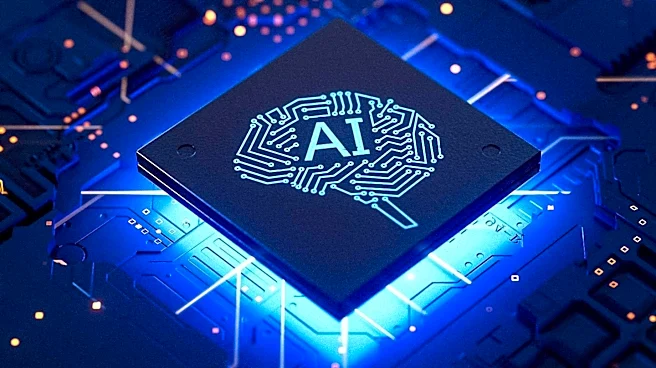
the market is set to expand from $66.73 billion in 2025 to $73.32 billion in 2026, demonstrating a compound annual growth rate (CAGR) of 9.9%. This growth is fueled by increasing demand across various sectors, including cloud computing, artificial intelligence (AI), consumer electronics, telecommunications, data centers, and embedded systems. Key drivers for this projected growth include advancements in sub-nanometer semiconductor fabrication, the expanding deployment of edge computing devices, and the increasing prevalence of AI-enabled processing workloads. The integration of heterogeneous computing architectures and the demand for energy-efficient, high-performance processors in both enterprise and consumer applications are also significant contributors.
Why It's Important?
This significant expansion in the MOS microprocessor market holds profound implications for the U.S. technology sector and broader economy. U.S.-based companies like NVIDIA, Intel, Broadcom, and Texas Instruments are key players poised to benefit from this growth, as they are profiled for their offerings and market strategies. The increasing demand for AI-enabled processing workloads underscores the critical role of advanced microprocessors in driving innovation across industries, from autonomous vehicles to advanced analytics. The rising adoption of open-source RISC-V architecture in embedded processors is particularly noteworthy, as it could foster greater competition and innovation, potentially reducing development costs and accelerating time-to-market for new products. This trend could also enhance supply chain diversity and resilience, a crucial factor for U.S. technological independence and security.
What's Next?
The MOS microprocessor market is expected to continue its upward trajectory, with manufacturers focusing on several key trends. These include ongoing semiconductor process-node scaling, increased adoption of advanced lithography techniques, and the expansion of chiplet-based modular processor architectures. Investment in ultra-low-power MOS device designs, heterogeneous integration, and three-dimensional stacking technologies will also be critical. The growing embrace of RISC-V architecture is anticipated to create new opportunities for processor developers and technology providers, potentially leading to a more diverse ecosystem of hardware solutions. Cloud computing demand will remain a significant catalyst, as enterprises continue to migrate workloads to cloud environments, driving the need for efficient microprocessors capable of managing large-scale data processing across distributed servers and data centers.
Beyond the Headlines
The evolution of the MOS microprocessor market, particularly with the emphasis on AI and RISC-V, signals a fundamental shift in computing paradigms. The move towards more specialized and energy-efficient processors is not just about performance but also about sustainability and the environmental impact of data centers. The open-source nature of RISC-V could democratize hardware development, potentially leading to a surge in custom silicon solutions tailored for specific applications, which could disrupt traditional market leaders. This shift also raises important questions about intellectual property rights in an increasingly open-source hardware landscape and the geopolitical implications of semiconductor manufacturing capabilities. The continuous push for sub-nanometer fabrication also highlights the immense capital investment and advanced scientific expertise required, further solidifying the strategic importance of semiconductor leadership.