
What's Happening?
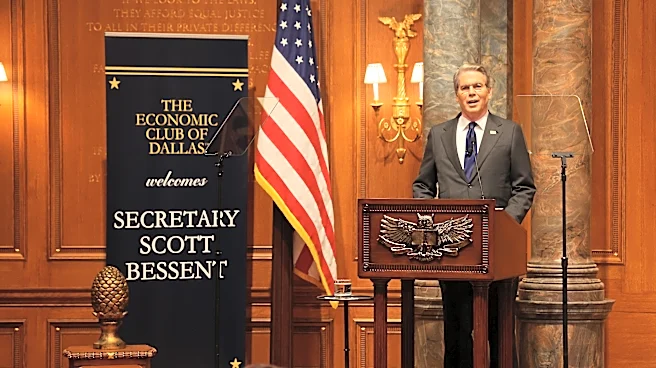
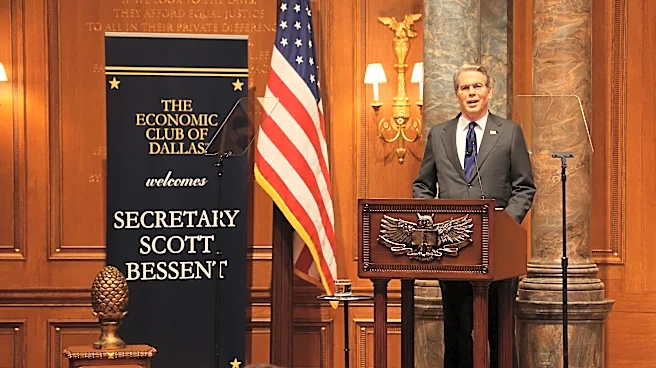
Treasury Secretary Scott Bessent has issued a warning regarding the potential risks to the economy if the Federal Reserve tightens monetary policy too aggressively. This statement has contributed to a cooling
of market panic that was observed last week, particularly concerning interest rate hikes. Despite Bessent's caution, markets are still pricing in a high probability, approximately 93%, of a 25-basis-point rate hike in December, according to Trading Economics data cited by Goodreturns. This indicates that while there is some relief in the market, the situation remains fragile. The silver market, for instance, saw a rebound, with prices rising to $42.60 per ounce on November 23, 2026, after a significant drop in the preceding week. This rebound is partly attributed to softer Fed rate-hike discussions and a weaker dollar.
Why It's Important?
Secretary Bessent's intervention highlights the delicate balance the Federal Reserve must maintain between controlling inflation and avoiding a recession. His warning underscores the administration's concern about the broader economic impact of monetary policy decisions. For U.S. industries and economic stakeholders, an overly aggressive tightening could lead to increased borrowing costs, reduced investment, and slower economic growth. Conversely, a more measured approach, as suggested by Bessent, could provide stability but might risk prolonged inflation. The financial markets, particularly commodities like silver, are highly sensitive to these signals, with price fluctuations directly affecting investors and producers. The current market sentiment, characterized by both relief and fragility, suggests that businesses and consumers alike are closely watching the Fed's next moves, which will significantly influence economic conditions and investment strategies.
What's Next?
The immediate focus for markets and policymakers will be the upcoming Federal Reserve meeting in December, where a decision on interest rates is expected. The market's current pricing of a 93% chance of a 25-basis-point hike suggests that a rate increase is largely anticipated, but any deviation from this expectation could trigger significant market reactions. Additionally, the release of the U.S. PCE inflation data later this week will be a critical indicator, as it is the Fed's preferred measure of inflation. This data will heavily influence future monetary policy decisions. The shortened U.S. trading week due to Thanksgiving could also lead to thinner liquidity and amplified price swings in financial markets. Stakeholders will be looking for further clarity from the Federal Reserve and economic data to gauge the future direction of monetary policy and its impact on the economy.
Beyond the Headlines
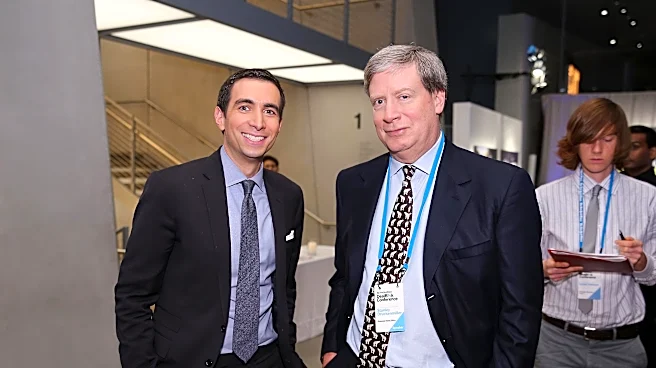
Secretary Bessent's public statement on monetary policy reflects a broader dynamic of communication and influence between the executive branch and the independent Federal Reserve. While the Fed is designed to operate independently, the Treasury Secretary's comments can signal the administration's economic priorities and concerns, potentially influencing market expectations and, indirectly, the Fed's considerations. This interplay is crucial for maintaining economic stability and investor confidence. The current environment of high uncertainty, as noted by investor Stanley Druckenmiller regarding the broader market, suggests that traditional economic models may be less reliable, necessitating careful and adaptive policymaking. The long-term implications of current monetary decisions will shape the U.S. economic landscape for years, affecting everything from employment rates to the cost of living and the competitiveness of U.S. industries globally.