

What's Happening?
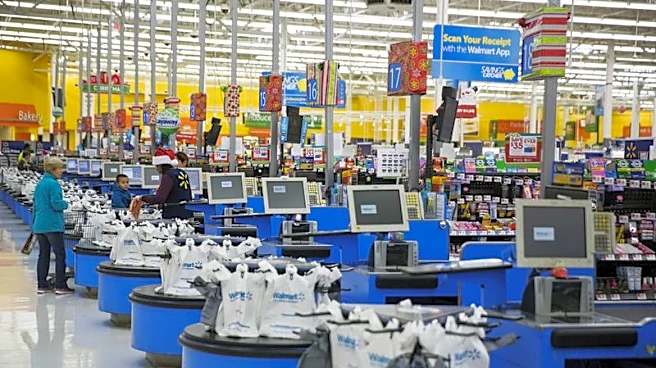
Walmart is significantly investing in and expanding its delivery network, leveraging its extensive physical store footprint to expedite product delivery to customers. During the company's third-quarter 2027 earnings call, Walmart CEO John Furner highlighted
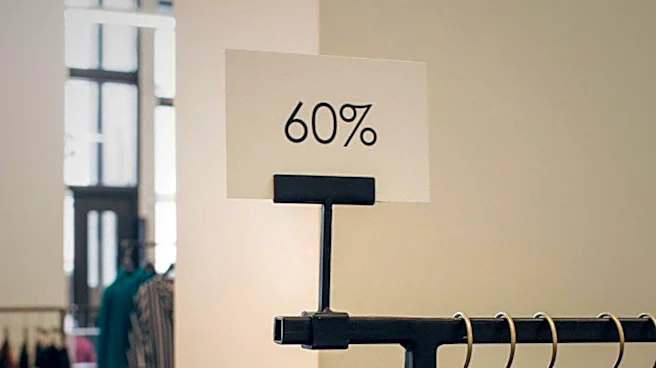
that the retailer can now reach 96% of U.S. households in under three hours, and 60% in less than 30 minutes. This strategy integrates stores and e-commerce, treating them as connected components of a unified ecosystem rather than separate channels. The company is also making more marketplace inventory available for local delivery by placing it in stores, broadening product assortment for customers without relying on distant fulfillment centers. Furthermore, Walmart is extending its delivery capabilities to support quick-service restaurant partners, allowing customers to order food alongside other essentials.
Why It's Important?
This strategic shift by Walmart has significant implications for the U.S. retail landscape and consumer behavior. By integrating its physical stores with its digital operations, Walmart is enhancing convenience and speed, which are increasingly critical factors for shoppers. This move could intensify competition in the e-commerce and delivery sectors, potentially pressuring other retailers to improve their own delivery infrastructures. For consumers, it means faster access to a wider range of products, potentially reducing the need to shop elsewhere. The ability to deliver to a vast majority of U.S. households within a few hours, and a substantial portion within minutes, sets a new benchmark for retail delivery efficiency and cost-effectiveness, benefiting Walmart by attracting and retaining more customers.
What's Next?
Walmart's continued investment in its delivery infrastructure suggests a future where rapid, integrated retail experiences become the norm. The company is likely to further refine its logistics and potentially expand its partnerships with quick-service restaurants and other businesses to leverage its delivery network. This could lead to increased market share for Walmart in both traditional retail and emerging delivery-based services. Other retailers will likely respond by accelerating their own delivery improvements, potentially through similar store-integration models or by investing in advanced logistics technologies. The focus on speed and convenience will continue to shape consumer expectations and drive innovation across the retail industry.
Beyond the Headlines
The evolution of Walmart's business model reflects a broader trend in retail where the lines between online and in-store shopping are increasingly blurring. This integrated approach not only optimizes inventory management and reduces delivery costs but also redefines the role of the physical store. Stores are no longer just points of sale but also crucial hubs for fulfillment and last-mile delivery. This shift could have long-term implications for urban planning, local economies, and employment, as retail spaces adapt to serve dual functions. The emphasis on speed and convenience also raises questions about consumer expectations and the environmental impact of increased delivery traffic, prompting potential innovations in sustainable logistics.