



What's Happening?
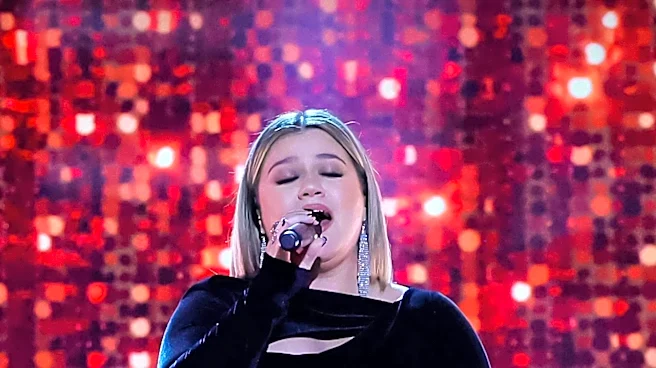
Kelly Clarkson recently voiced her dissatisfaction with an experience at Art of Play, a store in Brooklyn, New York. Clarkson stated that she felt she was treated as if she could not afford a desired purchase, drawing a comparison to a scene from the
movie 'Pretty Woman.' She suggested that the store missed out on a significant sale due to this perceived judgment. In response, Art of Play clarified that Clarkson had expressed interest in purchasing a unique singing and dancing bird, which was not for sale as it was used in their magic shows. The store acknowledged Clarkson's frustration and has since faced online backlash, expressing hope to resolve the misunderstanding with the singer. Clarkson has been candid about her personal and professional experiences, including past comments about her appearance and her decision to end 'The Kelly Clarkson Show' to focus on her family.
Why It's Important?
This incident highlights the critical importance of customer service and perception in retail, particularly for businesses that cater to a diverse clientele. Even for a celebrity like Kelly Clarkson, the feeling of being judged or underestimated can lead to a negative experience and public criticism, which can quickly impact a business's reputation, especially in the age of social media. For Art of Play, the online backlash demonstrates how quickly a single customer interaction, even if misunderstood, can escalate and affect public perception. It underscores the challenge for businesses to ensure all customers feel valued and respected, regardless of their appearance or perceived status. The situation also brings to light the complexities of managing unique or display-only merchandise and communicating its unavailability effectively without alienating potential customers.
What's Next?
Art of Play will likely continue its efforts to address the online backlash and potentially reach out to Kelly Clarkson to resolve the misunderstanding. This incident may prompt the store, and possibly other retailers, to review their customer service protocols and communication strategies regarding unique or non-sale items. Businesses might consider clearer signage or staff training to prevent similar situations. For Kelly Clarkson, this public criticism is consistent with her candid persona, and she may continue to share such experiences, influencing public discourse on consumer treatment. The broader implication is a continued emphasis on empathetic and inclusive customer service practices across the retail sector, especially as consumer experiences are increasingly shared and amplified online.
Beyond the Headlines
Beyond the immediate interaction, this event touches upon deeper societal issues of implicit bias and judgment based on appearance or perceived social status. Clarkson's 'Pretty Woman' comparison resonates because it taps into a common fear of being unfairly assessed. This incident serves as a reminder that even in seemingly transactional environments, human interactions are shaped by perceptions and biases, which can have significant consequences for both individuals and businesses. It also highlights the power of celebrity in shaping public opinion and the rapid dissemination of information through social media, where a single negative experience can quickly become a widely discussed topic. The situation encourages a broader reflection on how businesses can cultivate an environment where all customers feel genuinely welcomed and respected, fostering positive interactions that transcend superficial judgments.