





What's Happening?
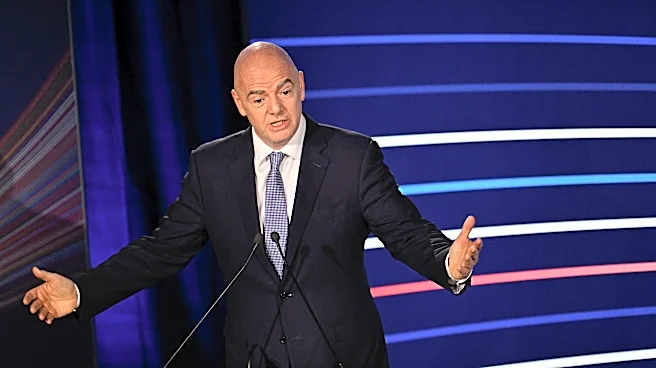
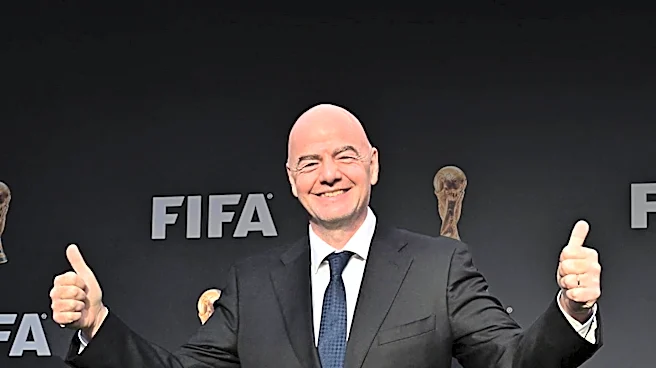
UEFA, European soccer's governing body, is escalating its efforts to challenge FIFA President Gianni Infantino, threatening potential criminal proceedings in Switzerland. This move comes in response to Infantino's abandoned FIFA Forward Enterprise (FFE)
plan, which aimed to sell stakes in the World Cup's commercial and event operations to private investors. A legal document filed in the United States District Court by UEFA accuses Infantino of promoting a 'fraudulently off-market price for his own benefit' in a proposed $4.2 billion deal with Thrive Eternal, an American investment fund. JPMorgan and Bann Ventures, along with its CEO Greg Maffei, were also named in UEFA's legal filings as entities involved in the FFE project. While FIFA has stated the FFE plan is 'irrevocably and permanently withdrawn,' UEFA views this as a significant escalation in its ongoing dispute with Infantino, with many European football executives expressing a desire for a 'regime change' at FIFA.
Why It's Important?
This dispute highlights a significant power struggle within global football governance, with potential ramifications for the sport's commercial future and leadership. The involvement of U.S.-based entities like Thrive Eternal, JPMorgan, and Bann Ventures in the proposed FFE plan underscores the global financial interests intertwined with major sporting events like the World Cup. UEFA's legal challenge, particularly its accusation of 'fraudulently off-market price,' could lead to increased scrutiny of financial dealings within international sports organizations. The outcome of this conflict could influence how future commercial rights for major tournaments are negotiated and sold, potentially impacting investment opportunities and the financial landscape for football federations worldwide. The ongoing battle also raises questions about transparency and accountability at the highest levels of international sports administration.
What's Next?
UEFA is seeking disclosure of documents and communications related to the FFE plan, with a decision on their request expected within days. Should FIFA and the other named parties resist, UEFA may proceed with criminal proceedings in Switzerland. The situation is unfolding ahead of FIFA's presidential election in March next year, where Infantino is expected to seek re-election. UEFA, in conjunction with Concacaf and the AFC, is pursuing a three-pronged strategy: challenging Infantino, identifying a suitable candidate to oppose him, and pushing for governance reforms within FIFA. While some believe Infantino may not complete his term, others suggest he will not resign without a fight. The longer it takes for a challenger to emerge, the more it may favor Infantino's re-election prospects.
Beyond the Headlines
The conflict extends beyond a simple power struggle, touching upon deeper issues of governance, ethics, and the commercialization of sport. UEFA's pursuit of legal action, despite its potential cost, signals a determination to fundamentally alter FIFA's leadership and operational culture. The accusations of promoting a 'fraudulently off-market price' raise ethical questions about the integrity of financial negotiations at the highest levels of global football. This situation could trigger broader discussions about the role of private investment in sports, the valuation of major sporting assets, and the potential for conflicts of interest. The outcome may set precedents for how international sports federations are held accountable for their financial decisions and could influence future governance models across global sports organizations.