






What's Happening?
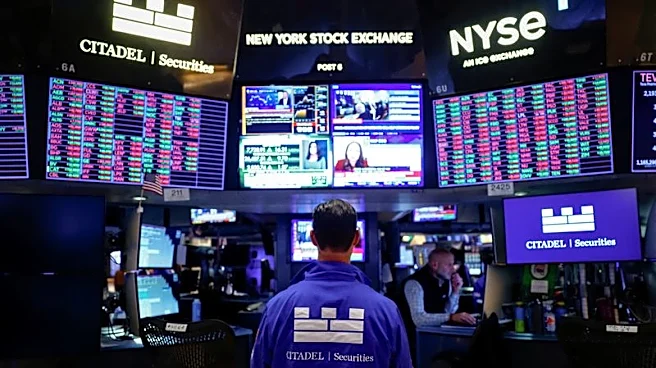
On Friday, October 30, the Dow Jones Industrial Average fell by approximately 572 points, or 1.1%, as U.S. stocks experienced a broad selloff. This decline was part of a larger market downturn that saw the S&P 500 close down 1.82% at 7,580.07, marking
its worst day since June and its third consecutive losing week. The tech-heavy Nasdaq also suffered, sinking 2.86% to 25,437.00. A major contributor to this market movement was Intel, which saw its stock plunge about 29%, its worst performance since 1974. This significant drop in Intel's value, erasing roughly $140 billion from its market capitalization, followed a profit forecast that fell below analysts' expectations. The overall market sentiment was further impacted by concerns stemming from Alphabet's performance and Amazon's earnings outlook, which added to investor unease.
Why It's Important?
The recent market downturn, particularly the sharp decline in the Dow Jones Industrial Average and other major indices, highlights growing investor apprehension regarding the sustainability of the artificial intelligence (AI) driven market rally. The substantial loss experienced by Intel, a key player in the technology sector, signals that even established companies are vulnerable to market corrections if their performance does not meet high expectations fueled by AI enthusiasm. This event could lead to a re-evaluation of tech stock valuations across the board, potentially impacting investment strategies and capital allocation in the U.S. technology sector. While the S&P 500 remains up by about 11% for the year, the recent losses indicate a shift in market confidence, suggesting that the market's reliance on the AI narrative is being tested. This could affect retirement funds, individual investment portfolios, and the broader economic outlook if the tech sector continues to face headwinds.
What's Next?
The immediate future will likely involve close monitoring of tech company earnings reports and profit forecasts to gauge whether the recent selloff was an isolated event or the beginning of a broader market correction. Investors will be looking for clearer indications of how significant investments in AI infrastructure are translating into tangible returns for companies. The performance of other major tech firms in the coming weeks will be crucial in determining market sentiment. Analysts will also be assessing whether the current market conditions will lead to a shift in investment towards more stable, less growth-oriented sectors. Furthermore, the Federal Reserve and other economic policymakers will be observing these market fluctuations for any signs of broader economic instability, which could influence future monetary policy decisions. The market's reaction to upcoming economic data and corporate guidance will provide further clarity on the direction of U.S. equities.
Beyond the Headlines
This market correction, particularly in the tech sector, raises deeper questions about the valuation models currently applied to companies heavily invested in AI. The rapid ascent of AI-related stocks has led to concerns about a potential bubble, similar to past tech booms. The Intel situation underscores the risk that even with significant technological advancements, investor confidence can quickly erode if financial performance does not align with speculative growth projections. This could prompt a more cautious approach to tech investments, emphasizing profitability and proven business models over speculative future potential. Furthermore, it highlights the interconnectedness of the global economy, as U.S. market movements can have ripple effects internationally. The event also serves as a reminder of the inherent volatility in equity markets and the importance of diversified investment strategies, especially in sectors experiencing rapid technological change and high investor expectations.