




What's Happening?
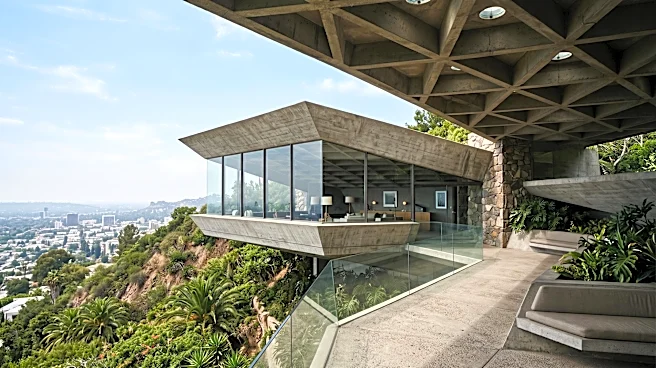
John Lautner's Sheats Apartments, a historic-cultural monument near UCLA, has become widely known as a student party house, particularly among fraternities, leading to significant deterioration and neglect. Built in 1949, the building was once hailed
as an architectural marvel. However, its proximity to fraternity row has made it a popular, albeit unofficial, party venue for decades. The property manager, Fariba Ghaffari, whose family has owned the building since 1991, acknowledges its poor condition, stating, 'It is not in the best shape.' Architectural historians, like Eleanor Schrader of the John Lautner Foundation, express dismay over the lack of respect for its architectural significance. Despite its disrepair, current residents, some of whom are UCLA students, have embraced its party reputation, even offering photography and videography services for events under the banner La Horizon.
Why It's Important?
The transformation of a significant architectural landmark into a neglected party hub highlights a broader challenge in urban preservation and the clash between historical value and contemporary usage. For architectural enthusiasts and preservationists, the deterioration of the Sheats Apartments represents a loss of cultural heritage and a failure to adequately protect important design legacies. The situation also underscores the economic realities of maintaining historic properties, as the owner faces substantial costs for repairs and earthquake retrofitting, totaling nearly $300,000 since 2015. The difficulty in attracting non-student tenants due to its location near fraternity row further complicates efforts to restore and preserve the building, impacting its long-term viability as a respected architectural site. This scenario reflects a tension between the demands of a vibrant university community and the need to safeguard historical assets.
What's Next?
The future of the Sheats Apartments remains uncertain, with significant challenges in its preservation and management. The property owner, Fariba Ghaffari, has expressed a desire to attract different tenants and has even considered working with UCLA to rent exclusively to architecture students, though the university's architecture department has not commented on the idea. This proposal could potentially align the building's use with its architectural significance, fostering a greater appreciation among its residents. However, the substantial costs of refurbishment, estimated to be in the millions, and ongoing legal disputes regarding construction damage, present major hurdles. Without a clear plan for restoration and a shift in its tenant demographic, the building's condition is likely to continue to decline, further jeopardizing its status as a historic landmark. The ongoing debate will likely involve preservation groups, the property owners, and potentially UCLA, seeking a sustainable solution.
Beyond the Headlines
The story of the Sheats Apartments delves into the complex relationship between architectural legacy, urban development, and generational shifts in appreciation. It raises questions about who is responsible for preserving cultural landmarks, especially when private ownership intersects with public interest. The building's current state as a 'not-so-secret UCLA party spot' reflects a broader cultural phenomenon where historical spaces are reappropriated by youth culture, often without an understanding of their original intent or significance. This dynamic highlights a gap in educational outreach regarding local architectural heritage. Furthermore, the financial burden of maintaining such a property, coupled with the challenges of its immediate environment, underscores the need for innovative solutions, potentially involving public-private partnerships or specialized grants for historic preservation. The narrative serves as a poignant reminder that without active stewardship and community engagement, even designated historic monuments can fall into disrepair and lose their intended purpose.