



What's Happening?
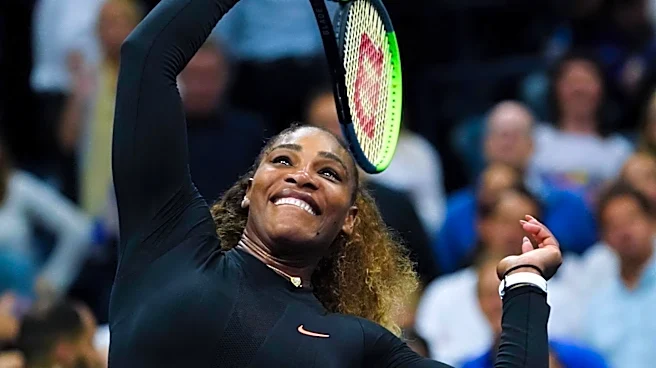
Serena Williams secured her 23rd Grand Slam title at the Australian Open in January 2017, defeating her sister Venus Williams in the final. This victory marked a significant milestone in her career, making her the player with the most Grand Slam singles
titles in the Open Era. The remarkable aspect of this achievement was revealed weeks later when Williams announced she was approximately eight weeks pregnant at the time of the tournament. She won the title without dropping a single set throughout the competition. This win extended her record of major singles titles, which began with her first Grand Slam at the 1999 US Open at the age of 17, spanning an 18-year period to her last title at 35. Her career also includes 319 weeks as world No. 1, 14 Grand Slam doubles titles with Venus, and four Olympic gold medals.
Why It's Important?
This event is important as it highlights Serena Williams' extraordinary athletic prowess and resilience, further solidifying her status as one of the greatest athletes in history. Winning a major championship while pregnant showcases an unparalleled level of physical and mental fortitude, challenging conventional perceptions of athletic capability during pregnancy. Her achievement serves as an inspiration globally, particularly for women, by demonstrating that high-level professional success can coincide with significant life events like pregnancy. It also sparked broader conversations about women in sports, maternity leave, and the support systems available for female athletes balancing their careers with family aspirations. The revelation added another layer to her legacy, emphasizing her dedication and ability to perform under unique circumstances.
What's Next?
Following her 2017 Australian Open victory and subsequent pregnancy announcement, Serena Williams took a break from professional tennis for maternity leave. Her return to the sport was highly anticipated, with discussions focusing on her ability to compete at the elite level post-pregnancy. Her journey back to the court and subsequent performances continued to draw significant media attention and fan interest, as she aimed to add more Grand Slam titles to her record. Her story also contributed to ongoing dialogues within professional sports organizations about policies and support for athletes who choose to start families, potentially influencing future changes in how female athletes' careers are managed during and after pregnancy.
Beyond the Headlines
Beyond the immediate athletic achievement, Serena Williams' 2017 Australian Open win while pregnant carries profound cultural and societal implications. It challenged traditional narratives surrounding motherhood and professional ambition, particularly for women in demanding careers. Her openness about her pregnancy and subsequent return to tennis helped normalize the idea that women can pursue both high-level professional goals and motherhood without one precluding the other. This event contributed to a broader feminist discourse, advocating for greater understanding and accommodation for women in the workplace. It also underscored the physical capabilities of the female body, pushing boundaries and inspiring a re-evaluation of what is considered possible for pregnant athletes.