






What's Happening?
International Business Machines (IBM) stock has recently experienced a significant pullback, prompting a reevaluation of its share price in relation to its future cash generation. Over the past five years, the stock has seen a 130.8% return, leading to substantial
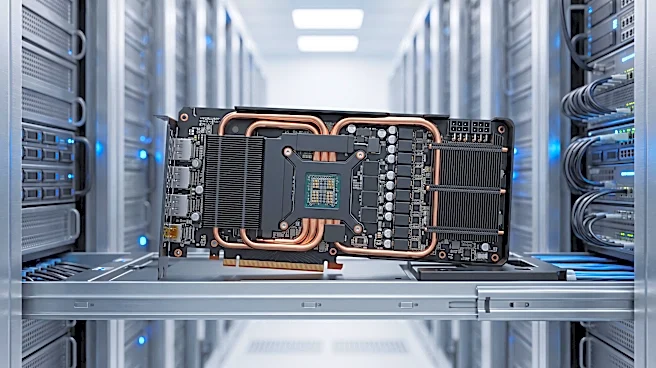
investor wealth. However, the current market price of $223.88, which is 2.03% lower than its previous close as of November 19, 2026, is being scrutinized. New partnerships in quantum and AI, including collaborations with NVIDIA, Fermilab, and Microsoft, are expected to generate new revenue streams and influence investor perceptions of IBM's cash generation profile. A Discounted Cash Flow (DCF) analysis suggests that IBM's estimated intrinsic value is meaningfully above its current share price, projecting annual free cash flows to reach the low $20 billion range by the early 2030s from approximately $14 billion over the last twelve months.
Why It's Important?
The reevaluation of IBM's stock valuation is crucial for investors, particularly those focused on long-term cash compounding. The company's strategic partnerships in quantum and AI are pivotal, as these technologies are at the forefront of innovation and have the potential to reshape various industries. If the DCF model's projections hold true, IBM's current stock price may not fully reflect its future earning potential, indicating a possible undervaluation. This situation could present an opportunity for investors who believe in the long-term growth trajectory of IBM's advanced technology initiatives. Conversely, if these partnerships do not translate into the anticipated revenue and cash flow, the stock could face further pressure, impacting investor confidence and potentially leading to a reassessment of its market position in the competitive tech landscape.
What's Next?
Investors will closely monitor how IBM's quantum and AI partnerships translate into tangible revenue growth and increased free cash flow. The market will be looking for evidence that these collaborations, particularly with entities like NVIDIA and Fermilab, are effectively contributing to IBM's financial performance. Future earnings reports and company announcements regarding the progress and success of these initiatives will be critical in shaping market sentiment and validating the DCF model's optimistic projections. The company's ability to integrate these advanced technologies into its business model and demonstrate their commercial viability will be key to justifying a higher valuation and attracting further investment. The ongoing development of AI infrastructure stocks, as highlighted by the availability of 53 such stocks for screening, indicates a dynamic and competitive environment that IBM must navigate effectively.
Beyond the Headlines
The discussion around IBM's valuation extends beyond immediate financial metrics, touching upon the broader implications of technological advancement in quantum computing and artificial intelligence. The emphasis on 'long-term cash compounding' suggests a shift in investor focus towards sustainable growth and innovation rather than short-term market fluctuations. The success of IBM's ventures in these cutting-edge fields could set precedents for how established technology giants adapt and thrive in an era of rapid technological change. Furthermore, the inherent complexity of AI models, as noted by IBM Research scientists, highlights the ongoing challenge of understanding and optimizing these technologies. This suggests that while computing power is essential, breakthroughs will also depend on deeper scientific understanding and efficient experimentation, potentially influencing future R&D strategies across the tech industry.