



What's Happening?
Mastercard and BVNK have introduced the Global Money Platform, a new financial infrastructure service designed to bridge traditional payment systems with stablecoin capabilities. This platform allows businesses to manage, convert, transfer, and spend
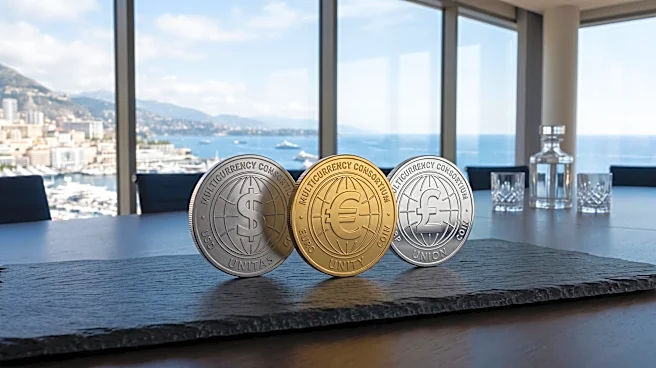
various forms of money, including fiat currencies and stablecoins, through a single API. This initiative marks the first significant integration of the two companies' capabilities since Mastercard acquired BVNK in August. The platform aims to simplify cross-border money movement and provide a unified foundation for businesses to operate across traditional and digital financial ecosystems. It offers multi-currency accounts, conversions, stablecoin-linked cards, and local bank payouts, integrating with Mastercard Move to connect stablecoin balances with local-currency payment routes. The service is targeted at banks, fintechs, payment service providers, and enterprises looking to embed digital-asset functionality without needing to assemble multiple separate providers.
Why It's Important?
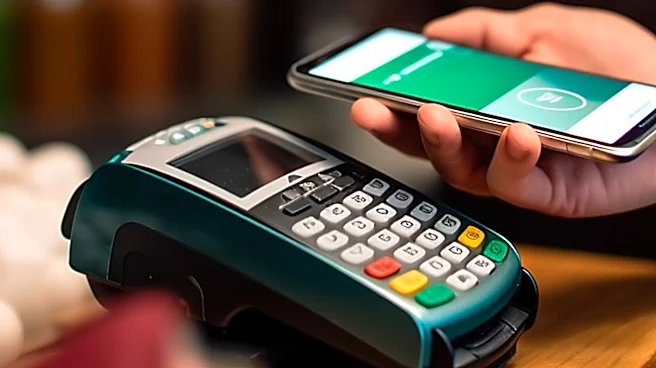
This development is significant for the U.S. financial landscape as it streamlines the integration of digital assets, specifically stablecoins, into mainstream financial operations. By offering a single platform for both fiat and stablecoin transactions, Mastercard and BVNK are addressing the operational complexities and capital inefficiencies often faced by international businesses managing multiple currencies and payment networks. This interoperability can reduce integration overheads and potentially improve settlement times and working-capital management for businesses. The platform's ability to connect stablecoin balances with Mastercard's extensive global acceptance network of hundreds of millions of merchant locations could accelerate the adoption and utility of stablecoins in everyday commerce, impacting how U.S. businesses conduct international transactions and manage their digital assets.
What's Next?
The Global Money Platform is expected to expand its coverage significantly, with Mastercard Move projected to reach over 40 currencies across more than 200 countries and territories by 2027. Businesses will likely begin to adopt this platform to consolidate their financial operations, starting with selected capabilities and gradually expanding their usage. The success of this platform could influence other major payment processors and financial institutions to further integrate digital assets into their services, potentially leading to a broader acceptance and use of stablecoins in the U.S. and globally. The platform's modular design allows for phased adoption, suggesting a gradual but steady shift in how businesses manage their multi-currency and digital asset portfolios.
Beyond the Headlines
This initiative represents a deeper shift towards a 'multi-money' strategy, where various forms of money, both traditional and digital, coexist and are interoperable. It highlights a growing recognition by major financial players like Mastercard that digital assets are not a separate financial ecosystem but an integral part of the future of commerce. The platform's focus on programmable and agentic commerce suggests a future where financial transactions can be more automated and intelligent. This could lead to innovations in supply chain finance, international trade, and treasury management, potentially reshaping how value is moved and managed across global economies. The ethical and regulatory implications of such widespread stablecoin integration will also become more prominent as these technologies become more embedded in daily financial operations.