






What's Happening?
Antilles Gold has entered into a binding Memorandum of Understanding (MoU) with GEM Global Yield, a Luxembourg-registered alternative investment group, to address U.S. sanctions impacting its Cuban joint venture, Minera La Victoria (MLV). The agreement,
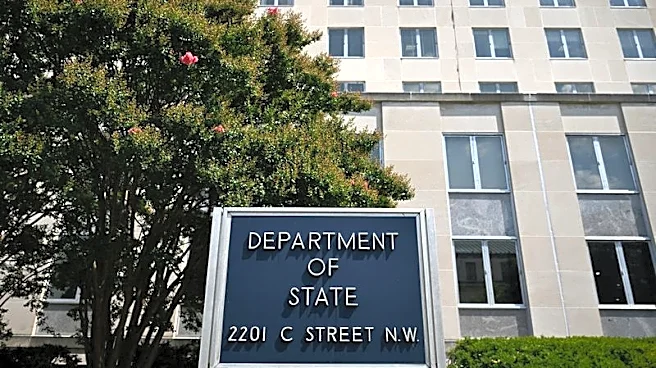
signed on August 25, stipulates that GEM will become a 25% shareholder in Antilles Gold Inc (AGI), Antilles Gold’s Cayman Islands subsidiary, which holds 50% of MLV. GEM, being 100% owned by U.S. citizens, will engage with the U.S. Department of State (DoS) to seek the lifting of sanctions recently imposed on MLV. This move is intended to allow the resumption of construction for the Nueva Sabana gold-copper mine. As part of the agreement, GEM will establish a new U.S. subsidiary to acquire the 25% stake in AGI, with a commitment to ensure at least 51% of AGI’s shares are held by U.S. entities by June 30, 2028. The MoU has a six-month term, during which GEM will conduct due diligence. If sanctions are lifted, AGI's board will be reconstituted to include a U.S. citizen as independent chairperson, two U.S. non-executive directors nominated by GEM, and one non-executive and one executive director nominated by Antilles Gold.
Why It's Important?
This development is significant for Antilles Gold as it directly addresses a major hurdle to its operations in Cuba: U.S. sanctions. The involvement of GEM Global Yield, a U.S.-owned entity, provides a potential pathway to navigate the complex regulatory landscape of U.S. foreign policy towards Cuba. By bringing in U.S. ownership and representation, Antilles Gold aims to create a structure that could satisfy U.S. DoS requirements, thereby de-risking its Cuban mining projects. The lifting of sanctions would not only allow the Nueva Sabana mine construction to proceed but also potentially unlock further investment and development opportunities for the La Demajagua mine, as surplus cash from Nueva Sabana operations will be reinvested. This strategy could set a precedent for other foreign companies operating in sanctioned environments, demonstrating a method to mitigate geopolitical risks through strategic partnerships and ownership restructuring. For the U.S., this could represent a nuanced approach to sanctions enforcement, allowing economic activity under specific conditions while maintaining broader policy objectives.
What's Next?
GEM Global Yield has a 60-day period to complete its due diligence on Antilles Gold Inc. Following this, GEM will formally approach the U.S. Department of State to negotiate the lifting of sanctions on Minera La Victoria. If successful, AGI will proceed with reconstituting its board to include U.S. citizens in key leadership roles, as outlined in the MoU. The parties are also expected to negotiate a comprehensive shareholders' agreement within 90 days. AGI plans to allocate $18 million in capital from GEM's subsidiary as a short-term loan to MLV, with $12 million earmarked for Nueva Sabana construction, $4 million for the La Demajagua Definitive Feasibility Study (DFS), and the remainder for working capital. The success of these negotiations and the subsequent lifting of sanctions will be crucial for the timely progression of Antilles Gold's mining projects in Cuba and will be closely watched by stakeholders in the mining and investment sectors.
Beyond the Headlines
The agreement between Antilles Gold and GEM Global Yield highlights the intricate interplay between international business, geopolitical sanctions, and corporate strategy. Beyond the immediate financial and operational implications for Antilles Gold, this case could serve as a test for the flexibility and interpretation of U.S. sanctions policy. It raises questions about the extent to which U.S. ownership and governance can mitigate the impact of sanctions on foreign entities operating in restricted territories. The commitment to U.S. majority ownership in AGI by 2028 suggests a long-term strategic alignment designed to ensure compliance and foster a more favorable regulatory environment. This situation also underscores the broader challenges faced by companies seeking to invest in resource-rich nations that are subject to international restrictions, pushing them to innovate in their corporate structures and partnerships to unlock economic potential while navigating complex political realities. The outcome could influence future investment decisions and sanction-busting strategies in similar contexts.