







What's Happening?
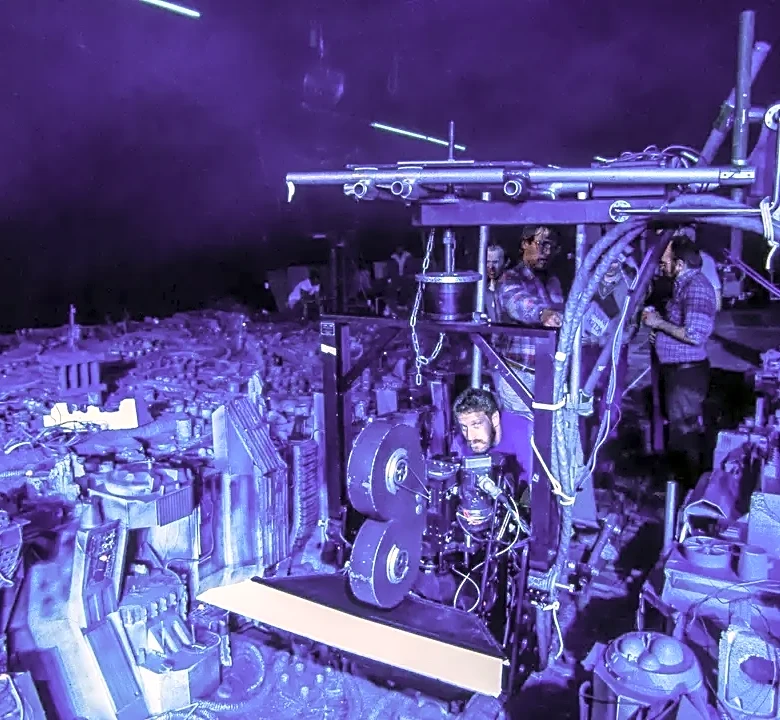
Alejandro G. Iñárritu's film 'Digger' extensively utilizes physical miniatures and dioramas, augmented by practical special effects and digital visual effects, to create its distinctive visual world. Miniature supervisor Simon Weisse oversaw the construction
of various models, including a 'nature vista' with a river, an ice shelf, and views of oil extraction activities. These miniatures were built in Weisse's Berlin studio and transported to Pinewood Studios in the UK for filming. The filmmakers, including Iñárritu and cinematographer Emmanuel Lubezki, initially sought to use real water in the miniatures but were advised against it by Weisse, leading to a hybrid approach where water elements were rendered digitally. This blend of traditional model-making with contemporary VFX, including Gaussian splatting techniques for scanning and replicating miniature planes, allowed for a unique visual aesthetic where the miniatures themselves become integral story points.
Why It's Important?
The significant use of miniatures in 'Digger' highlights a resurgence of traditional filmmaking techniques in an era dominated by digital effects. This approach is important because it demonstrates how practical effects can be seamlessly integrated with modern VFX to achieve a unique visual style and enhance storytelling. By making the miniatures visible as props within the film, 'Digger' offers a meta-commentary on the art of filmmaking and the construction of reality, which aligns with the movie's themes of narrative control and perception. This blend of old and new technologies could influence future productions, encouraging filmmakers to explore hybrid methods that leverage the tangible qualities of miniatures alongside the flexibility of digital tools, potentially leading to more innovative and visually rich cinematic experiences.
What's Next?
The successful integration of miniatures and digital effects in 'Digger' could pave the way for increased adoption of hybrid filmmaking techniques across the industry. Miniature supervisor Simon Weisse noted that this new technique, particularly Gaussian splatting for scanning models, makes it easier to use physical models rather than building everything in CG from scratch. This trend suggests a potential 'comeback' for models and miniatures, offering filmmakers more diverse tools for visual storytelling. The film's innovative approach to visual effects may also be studied in film courses, providing a practical example of how traditional and modern techniques can be combined effectively. This could lead to a renewed appreciation for the craft of model-making and its continued relevance in contemporary cinema.
Beyond the Headlines
The extensive use of miniatures in 'Digger' carries deeper implications beyond mere visual effects. By showcasing these models as part of the film's narrative, Iñárritu subtly comments on the constructed nature of reality and the manipulation of perception, themes central to the movie's political and environmental critiques. The decision to use physical models, even for elements like the 'fake' tree that reveals a stage rehearsal, reinforces the idea that what appears real can often be an elaborate fabrication. This artistic choice challenges audiences to consider how narratives are built and presented, both within the film's universe and in real-world contexts. It also highlights the enduring artistry of practical effects, suggesting that the tactile and tangible qualities of miniatures can convey a sense of authenticity and depth that purely digital creations might sometimes lack, thereby enriching the film's thematic complexity.