


What's Happening?
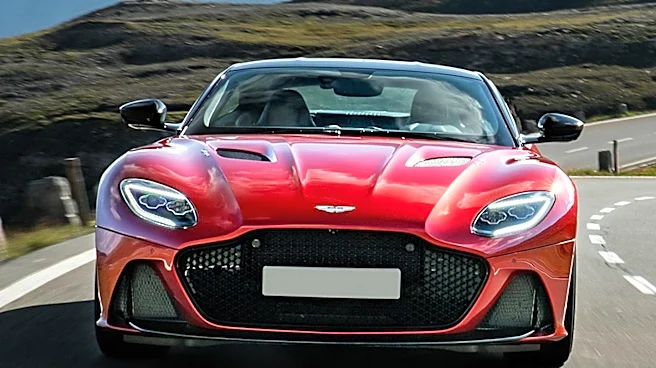
Britannia Auto, the official importer for Aston Martin, has introduced three new high-performance 'S' lineup models in South Korea. The unveiling took place at the 'Aston Martin Seoul' showroom in Daechi-dong, Gangnam District, Seoul. The models include
the super sport utility vehicle (SUV) 'DBX S,' the sports car 'Vantage S,' and the super tourer 'DB12 S.' These vehicles are equipped with a 4.0L V8 twin-turbo engine, emphasizing powerful output combined with a lighter body for a dynamic driving experience. Aston Martin has explicitly stated its intention to focus on meeting high-performance demand through internal combustion engines, rather than shifting towards electrification, which the company believes adds undesirable weight to vehicles. Actor Lee Jin-wook, the brand ambassador for Britannia Auto, was present at the launch event.
Why It's Important?
This strategic decision by Aston Martin to prioritize internal combustion engines over electric vehicles for its high-performance 'S' lineup in South Korea highlights a significant divergence in the automotive industry's global electrification trend. While many luxury and performance brands are heavily investing in EV technology, Aston Martin is doubling down on traditional engine power, citing concerns about the added weight of electric powertrains. This approach could resonate with a segment of the luxury car market that values raw performance and driving dynamics over environmental considerations or the latest technological advancements in electrification. The move could also influence other niche luxury manufacturers to reconsider the pace and extent of their EV transitions, especially for their performance-oriented models. For the U.S. market, this could signal a continued availability of high-performance gasoline-powered luxury vehicles, potentially impacting consumer choices and regulatory discussions around emissions standards and EV mandates.
What's Next?
Aston Martin's continued focus on internal combustion engines for its performance models suggests that the company will likely continue to refine and develop its V8 engine technology. This strategy may involve further lightweighting efforts and performance enhancements to maintain competitiveness against increasingly powerful electric alternatives. The company will closely monitor market reception in South Korea and other regions to assess the viability of this approach. Other luxury automakers will be observing Aston Martin's sales figures and brand perception to determine if there is a sustainable market for high-performance gasoline vehicles in an era of rapid electrification. Future regulatory changes regarding emissions and fuel efficiency in key markets, including the U.S., could also influence Aston Martin's long-term product strategy, potentially forcing a re-evaluation of its current stance on electrification.
Beyond the Headlines
Aston Martin's decision to resist the full embrace of electrification for its 'S' lineup touches upon a broader philosophical debate within the automotive world: the trade-off between performance purity and environmental responsibility. The company's emphasis on a 'dynamic driving experience' through lighter, V8-powered vehicles suggests a commitment to a traditional definition of luxury performance that many enthusiasts cherish. This stance could position Aston Martin as a unique player in the luxury segment, catering to a clientele that values the visceral experience of a gasoline engine. However, it also raises questions about the brand's long-term sustainability and its ability to adapt to evolving global environmental regulations and consumer preferences, particularly as younger generations increasingly prioritize eco-friendly options. The ethical implications of continuing to produce high-emission vehicles in a climate-conscious world will likely remain a point of discussion.