






What's Happening?
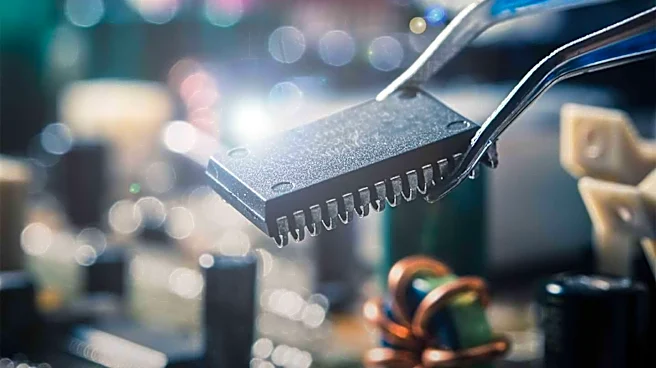
Multilayer ceramic capacitors (MLCCs), often referred to as the 'rice of electronics,' are becoming an emerging bottleneck in the Artificial Intelligence (AI) hardware supply chain. AI servers require significantly more MLCCs than traditional servers,
with a single Nvidia GB200 compute board using approximately 6,500 MLCCs, and future Rubin architectures potentially pushing this to 12,000. A full Nvidia GB200 NVL72 rack can contain 300,000 to 400,000 MLCCs, with future Vera Rubin racks potentially reaching 600,000. These components are crucial for stabilizing voltage, filtering electrical noise, and ensuring reliable operation in increasingly power-dense AI infrastructure. The demand for MLCCs tied to AI servers is projected to rise 4.3 times between 2025 and 2030. However, global supply is highly concentrated among five manufacturers in Japan, South Korea, and Taiwan, with capacity only able to grow 10-15% annually, leading to tightening supply and extended lead times for high-capacitance, AI-oriented MLCCs.
Why It's Important?
The critical role of MLCCs in AI hardware means that shortages of these seemingly small components can significantly delay shipments of far more valuable AI systems, impacting the deployment of AI infrastructure across U.S. industries. For U.S. tech companies and hyperscalers investing heavily in AI, the tightening supply and rising prices of MLCCs represent a new challenge in their supply chain management. The concentration of MLCC production in a few Asian countries also highlights a potential vulnerability in the global AI supply chain, similar to previous concerns about semiconductor manufacturing. This situation could lead to increased costs for AI hardware, slower AI development, and a push for greater diversification or domestic production of these essential components. The demand for MLCCs is further amplified by the broader trend of electrification, including electric vehicles and industrial automation, creating a 'K-shaped market' where high-end AI and automotive MLCCs are tight and expensive, while commodity-grade MLCCs remain more balanced.
What's Next?
Manufacturers like Samsung Electro-Mechanics and Murata are expected to make substantial investments to scale MLCC production, but new production lines can take approximately two years to build. This slow capacity expansion, coupled with accelerating demand, suggests that MLCC supply will remain tight for the foreseeable future. Lead times for certain high-capacitance AI-oriented MLCCs have already extended from about eight weeks to as long as 20 weeks. This will likely lead to continued price increases and the revival of long-term supply agreements, as seen with Samsung signing a $780 million annual AI-MLCC supply contract. For U.S. companies, this means a need for proactive supply chain planning, potentially engaging in direct long-term contracts with MLCC suppliers or exploring alternative component strategies. The Global X MLCC & Electronic Components ETF (MLCC) has been launched to provide investors targeted exposure to these critical suppliers.
Beyond the Headlines
The emergence of MLCCs as a bottleneck underscores the intricate and often overlooked dependencies within the high-tech supply chain. While much attention is given to advanced processors and memory, the functionality of these complex AI systems relies on a multitude of smaller, less glamorous components. This situation highlights the importance of a holistic view of the supply chain, where even seemingly minor components can have major impacts on overall system availability and cost. The increasing technical requirements for MLCCs in AI servers, such as smaller size, higher capacitance, and greater thermal tolerance, are driving innovation in materials science and manufacturing processes. This could lead to new advancements in passive electronic components, but also further concentrate expertise and production capabilities among a select few manufacturers, potentially exacerbating supply chain risks in the long term. The strategic importance of these components extends beyond AI to other critical technologies like electric vehicles, making their supply a broader economic and national security concern.