








What's Happening?
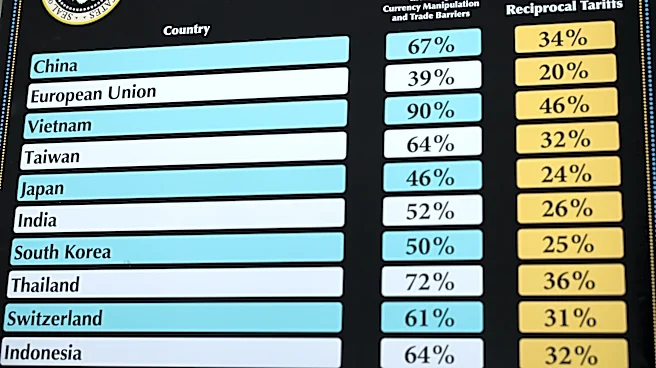
In March of this year, the Office of the U.S. Trade Representative (USTR) initiated investigations under the Trade Act of 1974 into structural excess capacity and production across various manufacturing sectors. While 16 countries, including the European
Union and India, are under investigation, China has been identified as the primary target. U.S. Trade Representative Jamieson Greer characterized these investigations as part of the Trump administration’s reindustrialization efforts. Greer has criticized trading partners for producing more goods than their domestic consumption demands. Treasury Secretary Scott Bessent, during the G20 finance ministers’ meeting in Asheville, N.C., encouraged G20 counterparts to adopt tariff strategies to address 'cheap exports' causing global economic imbalances. Similarly, at the G20 trade ministers meeting in Milwaukee, Greer noted that most countries agreed on the need to address excess capacity, though China’s objection led to an impasse.
Why It's Important?
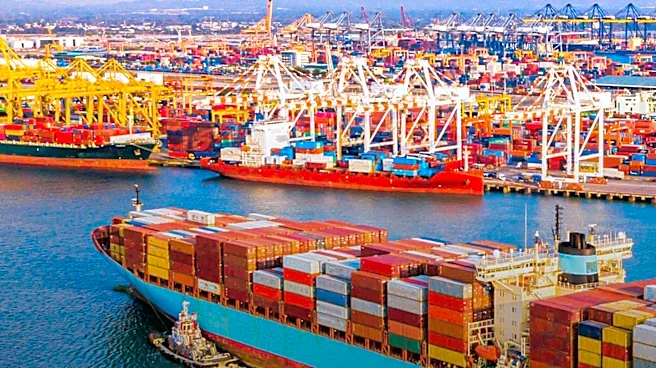
These investigations are crucial as they signal a continued aggressive stance by the U.S. government against what it perceives as unfair trade practices, particularly those by China. The focus on 'excess capacity' suggests a broader strategy to protect and revitalize U.S. domestic manufacturing industries. If the USTR concludes that excess capacity exists and harms U.S. interests, it could lead to new tariffs, trade barriers, or other punitive measures, impacting global supply chains and international trade relations. The U.S. argument is that such overproduction distorts global markets and undermines fair competition, potentially leading to job losses and economic disadvantages for countries with more balanced production-consumption ratios. China, however, views its industrial output as a natural part of global economic dynamics and a 'China opportunity 2.0' for the world.
What's Next?
The USTR’s investigations are ongoing, and their findings will likely inform future U.S. trade policy decisions. Depending on the conclusions, the U.S. could implement new trade remedies, such as increased tariffs or import quotas, against countries found to be engaging in practices that create structural excess capacity. This could further escalate trade tensions, particularly with China, which has consistently rejected the U.S. characterization of its production levels as 'overcapacity.' International forums like the G20 will likely continue to be venues for these discussions, with the U.S. pushing for multilateral action while facing resistance from targeted nations. The outcome of these investigations could significantly reshape global manufacturing landscapes and trade flows.
Beyond the Headlines
The concept of 'excess capacity' itself is a point of contention, with no official definition from the World Trade Organization. The U.S. defines it as producing more goods than a country can consume domestically, while China argues that it is a dynamic phenomenon driven by global supply and demand. This disagreement highlights a fundamental divergence in economic philosophies and trade policies. China points to historical precedents of manufacturing powerhouses like the UK and the U.S. having large trade surpluses and significant global industrial output. The U.S. approach could be seen as an attempt to rebalance global manufacturing and reduce reliance on foreign production, aligning with broader reindustrialization goals. However, critics might argue that such measures could stifle global economic growth and innovation by limiting efficient production where it occurs. The debate also touches on the role of industrial subsidies, which China defends as legitimate policy tools for emerging industries.