
What's Happening?
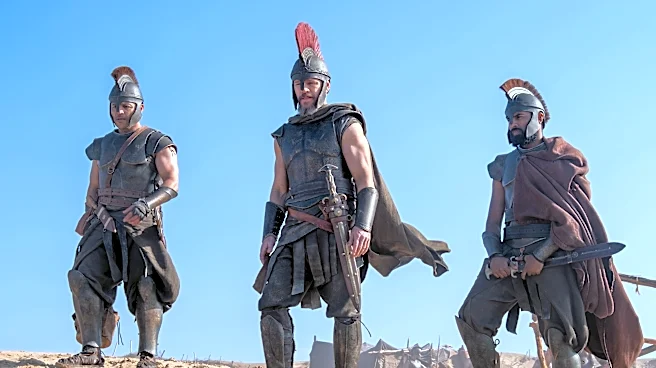
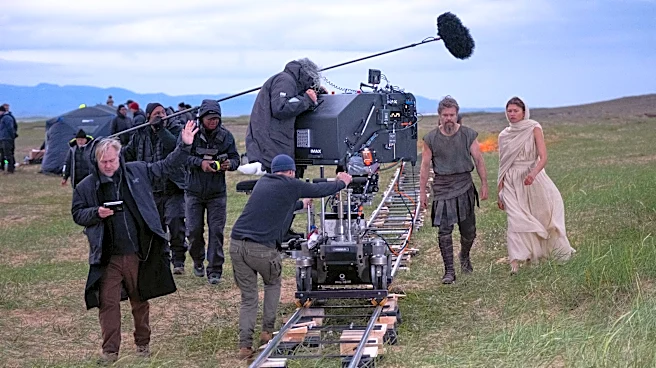
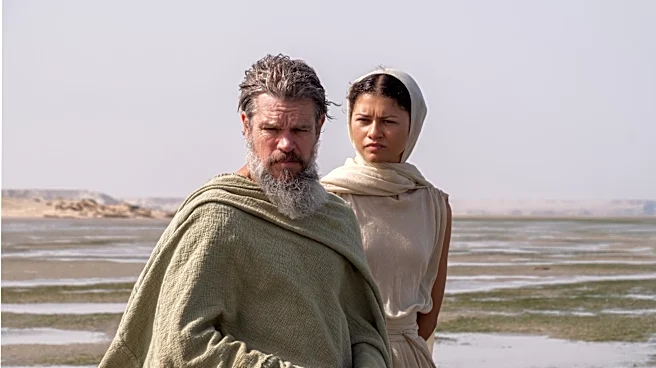
Christopher Nolan's film adaptation of 'The Odyssey' introduces the concept of the Sea Peoples, a term used to describe various seafaring groups theorized to have attacked regions in the eastern Mediterranean
during the Late Bronze Age. The film, starring Matt Damon as Odysseus, incorporates these historical elements into its narrative, suggesting that the Sea Peoples' raids contributed to the end of the Bronze Age. The storyline diverges from Homer's original epic by adding this historical context, which is not present in the traditional text. The film explores themes of war and its consequences, drawing parallels to modern narratives.
Why It's Important?
Nolan's adaptation of 'The Odyssey' brings historical context to a classic epic, offering audiences a new perspective on ancient events. By incorporating the Sea Peoples, the film highlights the complexities of historical migrations and conflicts, which resonate with contemporary issues of displacement and cultural interactions. This approach not only enriches the narrative but also encourages viewers to consider the broader implications of historical events on modern society. The film's exploration of these themes may influence future adaptations of classical literature, prompting filmmakers to integrate historical analysis into storytelling.
Beyond the Headlines
The inclusion of the Sea Peoples in 'The Odyssey' raises questions about the interplay between history and myth. Nolan's decision to blend historical facts with epic storytelling reflects a broader trend in cinema to explore the roots of cultural narratives. This approach can deepen audience engagement by providing a richer understanding of the source material. Additionally, the film's themes of war and its aftermath may resonate with viewers, offering a lens through which to examine current global conflicts and their historical precedents.