




What's Happening?
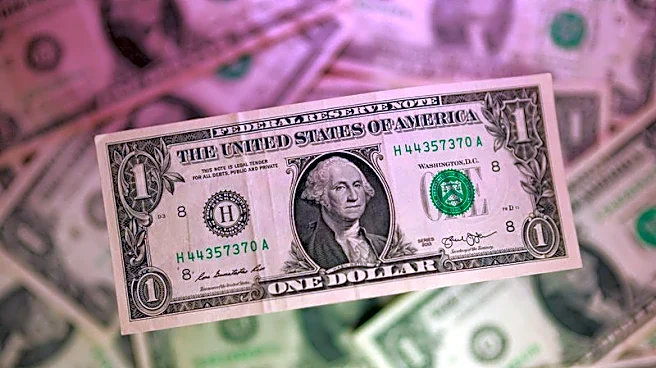
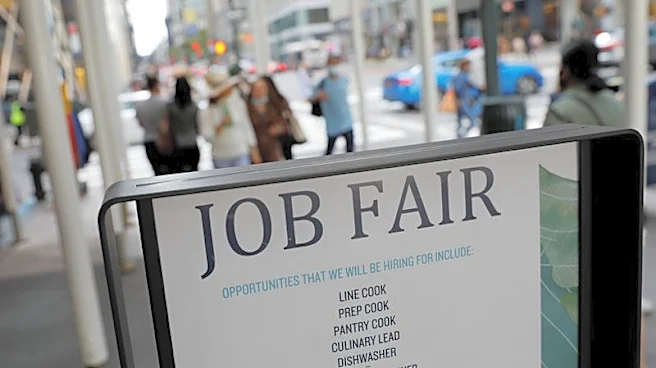
The U.S. dollar experienced a decline against major currencies such as the yen and euro following an unexpected drop in U.S. employment figures for July. The Labor Department reported a loss of 23,000 jobs, contrary to economists' expectations of an 80,000
job increase. This unexpected downturn has raised concerns about the strength of the U.S. economy and has led to a decrease in market expectations for a Federal Reserve interest rate hike. The unemployment rate fell to 4.1%, with the labor participation rate dropping to a five-and-a-half-year low of 61.4%. The dollar's decline was further influenced by a recent intervention between Japanese and U.S. authorities, which had previously pushed the dollar to a 13-week low.
Why It's Important?
The unexpected decline in U.S. employment figures has significant implications for the Federal Reserve's monetary policy. With the labor market showing signs of weakness, the likelihood of an imminent interest rate hike has diminished. This shift in expectations affects various economic stakeholders, including investors and businesses, as it influences borrowing costs and investment decisions. The dollar's decline also impacts international trade, as a weaker dollar can make U.S. exports more competitive but also increase the cost of imports. Additionally, the drop in Treasury yields following the jobs report reflects market sentiment and could affect future government borrowing costs.
What's Next?
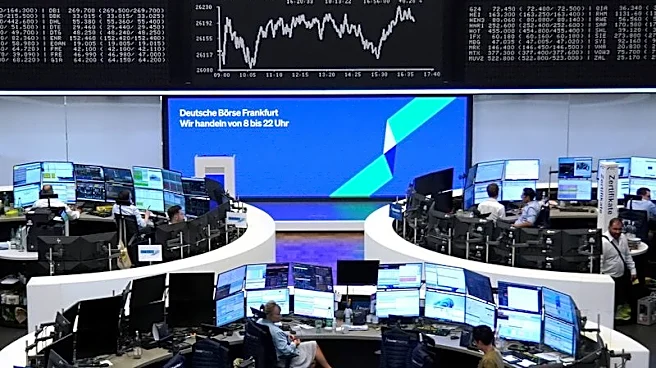
Market participants will closely monitor upcoming economic data releases to gauge the Federal Reserve's next steps. The central bank's decision-making will likely hinge on future employment reports and inflation data. If the labor market continues to show signs of weakness, the Fed may opt to delay rate hikes further, potentially into October or December. This could lead to continued volatility in currency and bond markets as investors adjust their expectations. Additionally, any further interventions by international authorities, such as the recent U.S.-Japan collaboration, could influence currency dynamics.